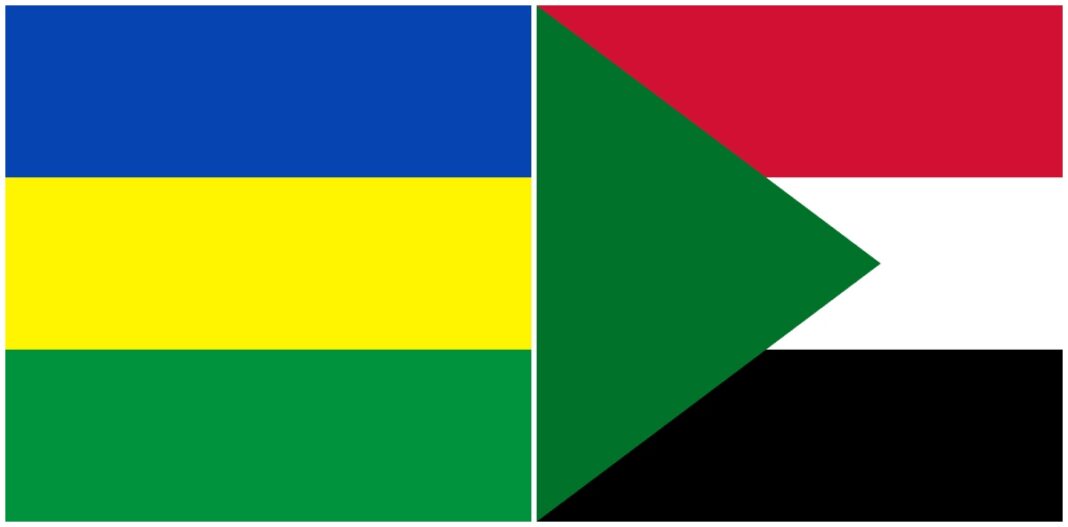
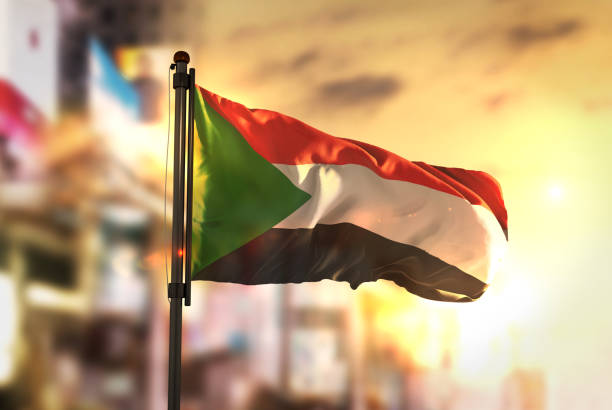
Happy New Year! As the world welcomes a new year, for Sudan and its people, wherever they are in the world, it is a double celebration. They are also marking Sudan’s Independence Day, which falls on 1 January. Kol ‘am winto wa al Sudan be khair! This year, Sudan celebrates its 70th Independence Day, having gained independence from Anglo-Egyptian rule in 1956.
Interesting fact: The Sudanese parliament, acting unilaterally and unanimously, declared Sudan’s independence on 19 December 1955. It was not until 1 January 1956 that the British and Egyptian governments formally recognised Sudan as an independent state. As a result, 1 January 1956 became the officially recognised date of Sudan’s Independence Day.
Celebrating the New Year alongside Sudan’s Independence Day is bittersweet for Sudanese around the world, as the country remains at war – approaching three years of conflict in April 2026, with no end in sight. Sudan continues to face the world’s largest displacement crisis and one of its worst humanitarian crises.
Amid these ongoing struggles, people in Sudan, particularly in Port Sudan and Khartoum, still marked the two occasions. Videos circulated on social media showing residents in Khartoum releasing fireworks from their homes on the night of 31 December 2025.
Celebrations at a time of despair offer hope – something to look forward to or celebrate, a brief pause from sadness, and a moment of positivity and joy. The new year does not necessarily mean that anything new will happen, or that positive change is guaranteed. That is simply the hope.
Meanwhile, the Rapid Support Forces (RSF) remain a major threat, particularly in the Darfur and Kordofan regions, where they have seized control and continue to commit crimes against humanity. For Sudan, the war between the Sudanese Armed Forces (SAF) and the RSF is far from over. Global protest and human rights organizations and activists have denounced the RSF’s barbaric actions against civilians with many NGOs coming through to provide emergency aid to those in need especially Al Fasher where famine has been declared since May 2024. However, the RSF continues their violent attacks, and Darfur, Kordofan and many other parts of Sudan are still struggling with basic necessities such as food, water, shelter and electricity.
Yet parts of the country, particularly Khartoum and Al Gezira, are slowly beginning to show signs of life. This is especially evident with the long-delayed reopening of Khartoum International Airport (KIA), which was destroyed by the RSF when the war began in April 2023. Its reopening will allow more displaced Sudanese to return, even if only to visit their homes after years of fighting. In fact, more than 1.3 million displaced Sudanese have already returned in 2025 following the SAF’s recapture of Khartoum, Al Gezira, and other major states from the RSF.
Sudan currently stands between two very different realities. As major parts of the country gradually return to a sense of normalcy and people begin rebuilding their homes and towns, Darfur and Kordofan remain under RSF control. There, the RSF continues its campaign of violence, ethnic cleansing, rape, and other atrocities against civilians, including women and children. We, as Sudanese, must not allow history to repeat itself by forgetting or ignoring the suffering of those in western and central Sudan. If this war has taught us anything, it is the importance of standing up for one another, regardless of our differences.
The RSF has turned against all of Sudan, but it has targeted Darfur with particular brutality, especially tribes of African descent, driven by deeply discriminatory beliefs. Our common enemy remains the RSF, which will continue to threaten all of Sudan as long as it exists under the leadership of Muhammad Hamdan Dagalo Musa (Hemedti). The group remains a large militia, continuing to kidnap and forcibly recruit people, especially children, from across Sudan and neighbouring countries such as South Sudan and Chad, grooming them to join its ranks.
This war has also taught us that anything can happen at any time. The war was never expected, at least not to this scale of destruction. The possibility of the RSF returning, recapturing Khartoum, and destroying it all over again is not impossible. They made this clear that they do not wish for life to return to Khartoum when they attacked the airport and nearby buildings in October 2025, just as preparations were underway for its reopening. So, while Sudan rebuilds and looks ahead, we must tread forward, but with caution.
What will happen in Sudan in 2026, or in the near future, is unpredictable. Things may get worse, they may get better, or they may stay the same. Sometimes, it even depends on who you ask or which region of Sudan you are talking about. Some areas may flourish, while others continue to despair. But hope, and it’s all we have, lies in the end of the war, the return of displaced people to their homes, and life in Sudan gradually returning to something resembling normalcy. It wasn’t perfect before; life was full of struggle. But nothing compares to what the country is experiencing today.

Ola Diab is the new founder and editor of 500 Words Magazine, and the deputy editor of Marhaba Information Guide, Qatar’s premier information guide. Based in Qatar, the Sudanese journalist graduated from Northwestern University in Qatar (NU-Q) in 2012 with a Bachelor of Science in Journalism and has since built a successful career in the print and digital media industry in Qatar. Find her on X (formerly Twitter) @therealoladiab or on LinkedIn.