It was such a pleasant surprise to be over 4,000 miles away from Sudan and yet meet someone who, while not Sudanese, once lived there. I recently met a young man whose father had served as a diplomat in Khartoum; he and his family used to live in the city for two years, from 2004 to 2006. What surprised me was not that they had lived in Sudan, but the small details that he remembered about Sudan and the Sudanese people, which continue to make him grateful to this very day for the time he and his family spent there.
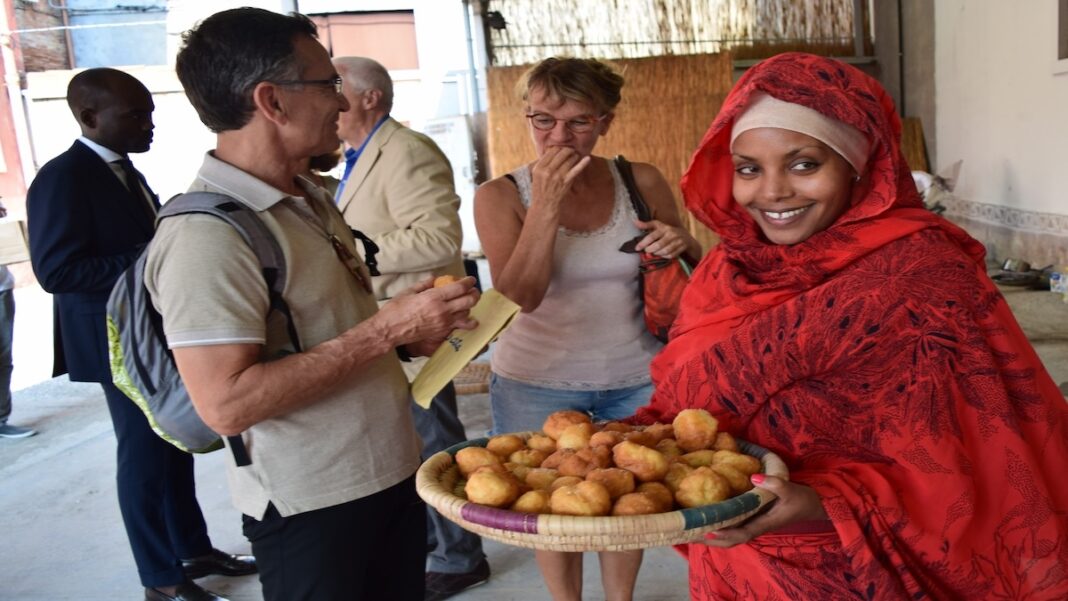
From a 45-minute conversation, “more with less” was the phrase that caught me off guard as it made me realise what most of us often dismiss about ourselves and the Sudanese personality in general. As he was describing their life in Khartoum, with wide eyes, he began passionately talking about their driver whom he called Uncle Ibrahim. He explained that he was a simple yet generous man who never missed a chance to invite them to his house. Continuing, he said, “Even though he was living with his family in a small house, they were more than happy to host us and serve us with various Sudanese dishes.” A time my friend will never forget was Eid Al Adha, when their neighbours invited them to join in eating shaya, which is the most popular traditional meal served during the holiday, consisting of pan-fried or grilled meat. He said the friendly, welcoming atmosphere of shared love was something he doubts he will find anywhere else. In his final reflection, he said, “Sudanese people will always give more with less,” reflecting on his personal experiences of Sudanese generosity toward those who have little. He also conveyed his solidarity with the Sudanese people in light of the current war.
Hearing such stories from a foreigner who is well-travelled was truly eye-opening, not only because he shared his perspective in comparison to the several places he has lived in across the globe, but also because it underlined two main values we, at least at this moment, fail to fully appreciate in a world where materialism often erases what truly matters – our values.
The first value is generosity with what one has, captured in the Sudanese proverb “الجود بالموجود”, which loosely translates to “generosity is giving what is at hand.” This proverb clearly showcases a crucial part of the Sudanese identity – to be a giver, which is a characteristic that is nurtured from childhood. This value is deeply rooted in Islamic teachings, which have been observed in Sudan for centuries and continue to shape the Sudanese identity today. While similar values exist in other societies, the Sudanese foster the value with greater importance.
The second value is the collective nature of the Sudanese society – the inclusion of any and every person in social life and activities, regardless of their origin, race, or ideology. My friend highlighted this when he described the atmosphere during in Eid Al Adha, a time when the gathering of people is considered an obligation. The inclusion is evident as my friend and his family were included in gatherings despite not being Sudanese.
This case is not an exception or new. Throughout time, Sudan has been home to foreigners or expatriates from diverse nationalities such as South Sudanese, Indians, Syrians, Palestinians, Egyptians, Ethiopians, and Eritreans, who have chosen to settle in Sudan for various reasons. As of late 2023, Displacement Tracking Matrix (DTM) estimations indicated a cumulative number of over 1.6 million foreign nationals, including about 1.1 million refugees and asylum seekers. Most foreigners were positively integrated into local social scene and some, even with the ongoing war in Sudan, continue to live in safe zones in the country. I believe this culture of inclusion is one of the most important reasons why foreigners choose to live in Sudan long-term; the social barriers and struggles for acceptance often encountered elsewhere are largely absent here.
I cannot help but notice the beauty of these values, which we tend to overlook, yet they are among the principles we must foster, as they represent the core and essence of who we are as a people and nation. Another point brought to my attention is how to rebuild the culture and sense of collectivism that the war has severely affected. I fear the echoes of this damage will sustain, leaving us with a new set of values that are far from what we truly are – “those who give more with less.”
Image source: Venice Biennale Sudan Pavillion
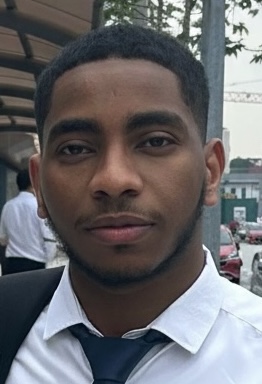
Mohamed Khalid Hussien Mustafa, a 21-year-old Sudanese, is currently pursuing a bachelor’s degree in Business Administration. Writing is among his many interests, which also include audio production, marketing, and linguistics. Displaced by the war, Mohamed has embarked on a new journey outside Sudan, acquiring valuable skills, learning more than four languages, and developing a fresh vision for his future.