
Recently, a trend has emerged in American podcasts where hosts and guests jokingly suggest sending someone, often unwanted or unfavoured, to Sudan as a form of punishment.
In another podcast, video creator Michael Mezzatesta, host of Better Future Podcast, hosted comedian Elizabeth Booker Houston. As they were talking Elon Musk, Elizabeth suggested deporting him to Sudan. “ElonMusk stated a new party. The America Party,” Mezzatesta said. “He needs to deported. I don’t support mass deportations. I support deporting Elon Musk, and I think he should be deported to Sudan,” Booker said. “I like Sudan as a destination for Elon Musk as well. I wouldn’t put him in South Africa. I think he’d be dangerous own there,” Mezzatesta said.
Sudanese-American writer, activist, and internet influencer Sara Elhassan, known as @bsonblast on social media, shared the clip on an Instagram post with a stitch (a feature that allows creators to take a short clip from another user’s video and add it to the beginning of their own video), commenting on the statements made by Mezzatesta and Booker. “After two-plus years of a devastating, horrifying, all encompassing war in Sudan that has victimised my people to an indescribable degree, I funnily enough just can’t find it in me to laugh about Sudan any more, which is hard because Sudan has often been the punchline in US pop culture and entertainment. Ironically, those people can’t event point to us on a map,” she said. Her commentary on the clip from Better Future Podcast gained over 2,000 likes, nearly 300 reshares, and over 500 shares on Instagram, which resulted in Mezzatesta himself commenting and apologising for posting the clip and the harmful comments that he and Booker made.
“I’m so sorry for posting that video — now that I’ve watched your response, I understand the ways in which is was insensitive and harmful. To be clear, the topic of Sudan came up in our discussion because a group of immigrants to the US had been deported to South Sudan about a week prior to our conversation. But of course, that doesn’t excuse my comment about South Africa, which I meant to be a reference to Elon’s ties to white supremacists there (but that you’ve now educated me on and highlighted the ways in which it was a harmful comment). I appreciate the grace you showed us in your response, and I want to make this right! In addition to taking down the video (already done), I will make a new video to draw attention to the situation in Sudan and what people can do to help,” he commented.
Most recently, on the Joe and Jada podcast by hip-hop legends and longtime friends Fat Joe and Jadakiss, the two American rappers talked about the engagement of American-Moroccan rapper French Montana to Dubai Princess Sheikha Mahra. “What I say to my brother is, I’m happy for you. God bless you and your fiancée,” Joe said. He then took a long pause before saying, “Don’t mess up or we gone find you in Sudan.” After taking another pause, he continued to say, “Don’t mess up. Sudan is where they’re not coming to rescue you.”
Joe’s clip went viral, with many Sudanese responding with laughing emojis and jokes, seemingly making light of his comment, which is problematic. To give the benefit of the doubt, some may not have realised the weight of what he said. I’ll admit, I didn’t either at first, until I reflected more deeply. Many of the Sudanese commenters are from the diaspora, most of whom have been abroad since before the war and have not experienced it first-hand. That said, Sudanese people everywhere have been affected by the war as a collective. Many of us have strong ties to Sudan, often visiting our homeland and families who are now displaced and have endured immense loss. Most importantly, we all, wherever we are, share a profound sense of losing a homeland, though some carry this loss more deeply than others, particularly those who once lived in Sudan and are now displaced.
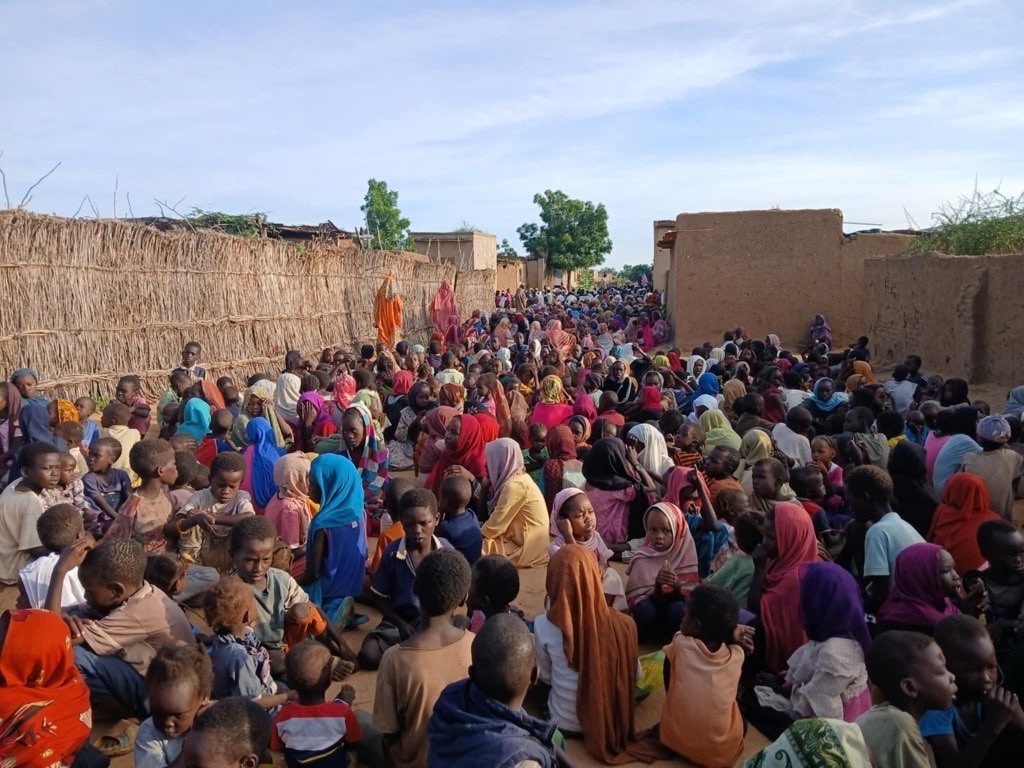
This brings me to why the trending expression is inconsiderate. Sudan is currently facing one of the world’s gravest humanitarian crises, marked by the largest displacement crisis globally, with an estimated 12 to 14 million people forced from their homes. The country is also on the brink of becoming the largest hunger crisis in recent history. All of this is a result the war that erupted on 15 April 2023 between the Sudanese Armed Forces (SAF) and the paramilitary Rapid Support Forces (RSF), which has already claimed more than 150,000 lives.
What struck me the most was Joe said, “Sudan is where they’re not coming to rescue you.” It made my heart feel heavy. Completely cold, and ruthless. It lacked mercy, empathy and compassion towards the struggles of others. Is he ignorant and unaware of the war in Sudan, and like Elhassan said, cannot even point Sudan out on the map? Or worse, he knows, but simply lacks empathy.
Days after Joe’s viral clip, another video went viral. This video, however, was of the torture and murder of Qisma Ali Omar, a young woman in Zalingei, Central Darfur, who was tortured to death, hung from a tree by her arms with her feet bound. The video, taken by a man in the RSF uniform standing nearby and responsible for her torture and death, was widely shared and sparked outrage and deep anger across Sudan – the mutilation of her body, her public crucifixion, and her alleged rape before death. This is the reality of life for the people in Sudan, unable to escape torture, violence, abuse, and starvation in the country. And yet, this is the Sudan Joe and other people are making jokes about. However, what’s happening in Sudan is not a matter for jokes.
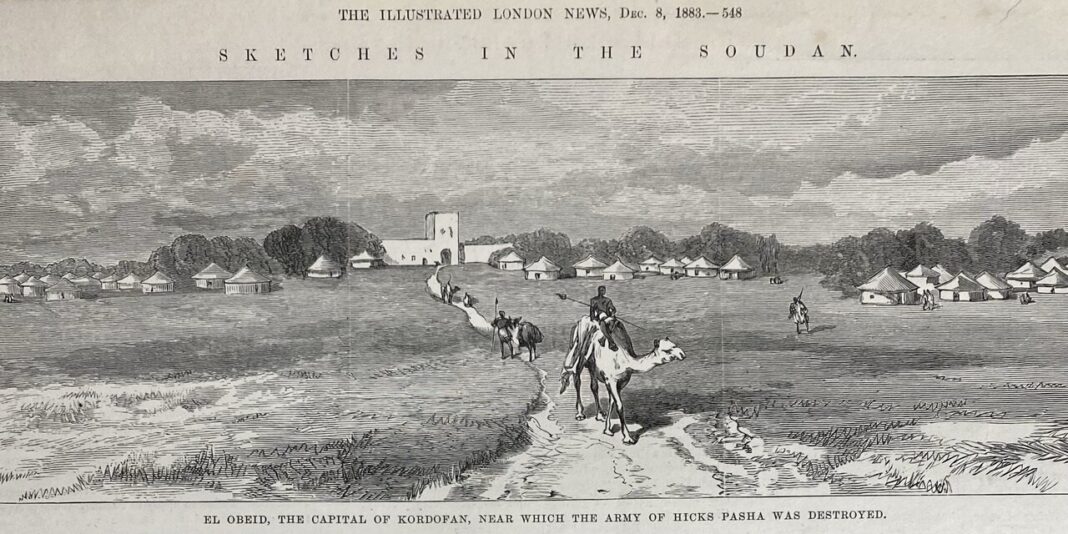
So yes, joking about sending someone to Sudan is deeply insensitive and unacceptable when millions of people are either attempting to flee or desperately wishing they could. Women, children, and the elderly are among those struggling every day just to stay alive. In Al Fasher, the capital of North Darfur, at least 260,000 people are literally dying under siege, including children, as they are tortured and deliberately starved by the RSF. The city has been the RSF’s siege since May 2024. Even when using that expression, the very least one can do is raise awareness about the ongoing war in Sudan and the suffering of its people, especially those in the Darfur and Kordofan regions, who remain under siege by the RSF.
As we live our lives in comfort, able to eat, drink and sleep and even laugh, we must be mindful of the suffering of others. Step outside of your own comfort and perspective so that you can see the world through to someone else’s eyes. As writer and philosopher Peter Singer says in The Life You Can Save: Acting Now to End World Poverty, “Putting yourself in the place of others…is what thinking ethically is all about.” Empathy is key. Put yourself in another’s place and imagine their struggles in difficult situations. Empathise with the feelings, thoughts, and experiences of others, and see the world from their point of view.
If life has taught us anything in recent years – from a sudden pandemic to floods, fires, earthquakes and other natural disasters to the unexpected outbreak of wars in Ukraine, Gaza, and Sudan – it’s that our comfortable, privileged lives can turn upside down at any time, in any place.

Ola Diab is the new founder and editor of 500 Words Magazine, and the deputy editor of Marhaba Information Guide, Qatar’s premier information guide. Based in Qatar, the Sudanese journalist graduated from Northwestern University in Qatar (NU-Q) in 2012 with a Bachelor of Science in Journalism and has since built a successful career in the print and digital media industry in Qatar. Find her on X (formerly Twitter) @therealoladiab or on LinkedIn.