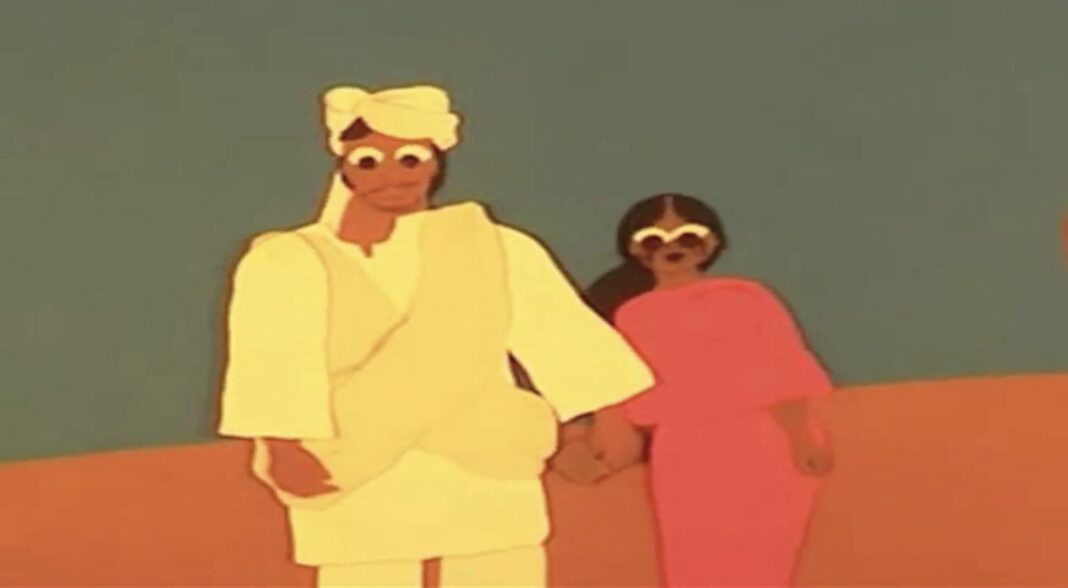



Recently, I was at a ‘azaa, a mourning gathering, with my family when my mother reintroduced me and my children to the grieving woman, who had known me as a child. Looking at my two children, the woman asked my mother, “These are your first grandchildren, right?” My mother confirmed.
Soon after, a relative sitting beside the grieving woman and my mother interjected, “You’re not officially a grandmother yet”. My mother was confused — as were all of us. “Your grandchildren came from a daughter, not a son. They are not yours. When you have grandchildren from a son then you’re officially a grandmother,” she explained, insinuating that grandchildren from a son are the ones that carry on the family name and legacy. It is important to note that she is a mother of three young men; two of whom were present.
My mother didn’t react; she seemed indifferent, simply saying “Inshallah,” referring to the hope of one day seeing her only son marry and have children. I, however, sat there quietly, feeling a range of emotions. l was flabbergasted but also felt deeply hurt. I felt devalued — she diminished both me and my children. She did not even look at me or address me as if my children and I were not there, further belittling our existence. The words that stuck with me the most were, “They are not yours” — as if my children could be rendered illegitimate and simply erased from the family and its bloodline. As hurt and offended as I was, I understood her reasoning and where it came from. Although I completely disagree, I later messaged my only brother, telling him about the comment and urging him to marry and have children. I am, after all, a product of my environment.
Although she made the comment lightheartedly, it stayed with me and lingered in my mind, raising serious and troubling concerns about how our society thinks. For one, it was disappointing to see a woman direct such words at other women. A clear example of toxic femininity. But what made it even more unsettling was that it reflects a broader, deeply rooted issue: the persistent and problematic preference for sons over daughters. Son preference is a long-standing global phenomenon rooted in social and cultural factors, as well as economic. This is especially true in Sudan and the Arab world, where having a son, particularly as the eldest, is often seen as essential, as he is expected to take on the father’s role as provider and protector when needed. Additionally, while both sons and daughters carry their father’s name, it is typically the son’s children who continue the family name. The daughter’s children take on their father’s last name after marriage.
Son preference is a form of gender preference or gender bias, which can lead to various issues. In some communities, son preference is a very serious matter where it is a primary cause of selective abortion, abandonment, divorce or even death. As the daughter of an obstetrician-gynecologist (OB-GYN), I’ve heard countless stories of female patients who are desperate to have a son and seek preconceptional gender or sex selection treatments or methods, often in hopes of pleasing their husbands. Additionally, in countries such as China, female infanticide, which is sex-selective induced abortion of female fetuses, is often practiced due to cultural preferences for sons over daughters, and can have significant demographic and societal impacts.
In some cases, son preference can even threaten the stability of a marriage. A husband may consider divorce or take a second wife solely to have a son. Some husbands mistreat their wives or blame them for not bearing a male child – when in fact, biologically, it is the male who determines the baby’s sex. Quick biology lesson: Sex chromosomes determine whether a child is genetically male or female. Women carry two X chromosomes (XX), while men carry one X and one Y chromosome (XY). If the father passes on an X chromosome, the baby will be female; if he passes on a Y, the baby will be male.
Additionally, gender preference can lead to parental favoritism or differential parenting, which can negatively impact siblings’ relationships and individual well-being. According to research on family dynamics, children who believe that their parents treat them differently from their siblings have poor psychosocial well-being. In essence, son preference, which places greater value on males, can contribute to discrimination against women and reinforce gender inequality.
Although son preference is still a global phenomenon, recent studies have shown it is fading in some countries, societies or cultures. Daughter preference is emerging and being observed – a shift from the more common son preference. However, it poses the same issues. Gender preference in itself, whether having a son or daughter, can be a concerning. This is evident with the rising trend of gender reveals. Videos on social media show how parents, along with their families and friends, react to finding out the gender of a baby. There are several videos showing parents reacting to gender reveal announcements — some visibly disappointed or less enthusiastic when the baby’s gender is revealed, such as a father disheartened to have a girl or a mother disappointed to have a boy. Others, however, show joyful and heartwarming reactions, like a father enthusiastically celebrating the news of having a daughter.
Gender preference, however, has no bearing on science. Children, regardless of gender, carry the bloodline — the legacy of both parents and their ancestors. Family lineage has always been traced throughout history, regardless of gender. With the advancement of science and technology such as DNA testing for ancestry and genealogy, it’s now possible to trace even the most distant relatives.
Gender preference at birth has long been a topic of discussion and remains an issue across many societies and cultures throughout history. While having a personal preference is natural, every child deserves to be celebrated, loved, protected and provided for – equally, regardless of their gender.
Notes:
*‘Azza: A gathering held after a person passes away to offer condolences to the bereaved family.
*A family name, also known as a last name or surname, is the part of a person’s name that is shared with other members of their family. It is typically passed down through generations and distinguishes a person from others with the same given name.
*Preconceptional gender or sex selection refers to methods used before pregnancy to increase the likelihood of conceiving a child of a desired sex.
*The word ‘gender’ itself has changed in recent times. Sex and gender are often used interchangeably, but they have distinct meanings. Sex refers to biological characteristics, often categorised as male or female, primarily related to reproductive organs and functions, while gender is a social construct encompassing roles, behaviors, expressions, and identities.

Ola Diab is the new founder and editor of 500 Words Magazine, and the deputy editor of Marhaba Information Guide, Qatar’s premier information guide. Based in Qatar, the Sudanese journalist graduated from Northwestern University in Qatar (NU-Q) in 2012 with a Bachelor of Science in Journalism and has since built a successful career in the print and digital media industry in Qatar. Find her on X (formerly Twitter) @therealoladiab or on LinkedIn.