Amid hunger and uncertainty in Sudan, the holy month of Ramadan persists in quieter, more fragile forms.
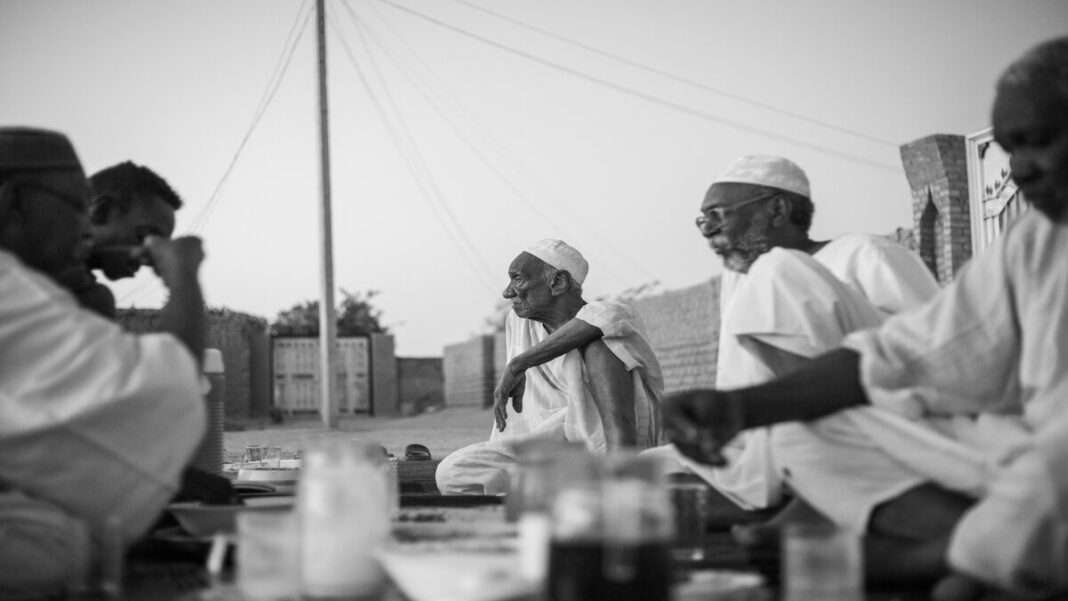
As the holy month of Ramadan moves into its early days, Sudan observes it under a shadow that has lingered far longer than anyone imagined. What was once a season defined by open doors, shared meals, and overflowing mosques now unfolds in quieter, fractured spaces, shaped by absence and restraint.
Nearly three years into the war, I remain internally displaced. I left Khartoum and returned to my hometown of Kassala, where more than 56,000 displaced Sudanese have also resettled. We have re-assimilated into familiar streets and routines, and life here carries a sense of normalcy that has been spared the worst of the violence. Markets function, mosques are open, and preparations for Ramadan unfold much as they once did, with careful planning and measured anticipation. Yet as the month approaches, my thoughts return to Al Sururab, a place I visited only months ago, where the aftermath of war continues to shape daily life in ways far more fragile and uncertain.
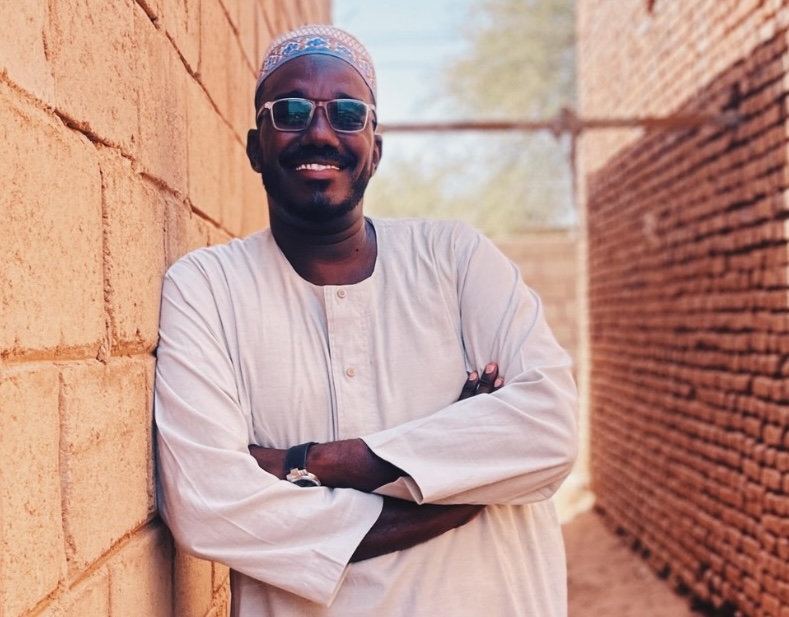
Mazin Alzain, an active member of Al Sururab community
“For the first time in more than two hundred years, our Ramadan communal meal is empty. So few families have remained, and we can no longer uphold this tradition,” said Mazin Alzain, an active member of Al Sururab community. Al Sururab is a small cluster of villages north of Omdurman. Nearly three years into the war, his reflection captures what Ramadan feels like for many Sudanese today.
Since the conflict between the Rapid Support Forces (RSF) and the Sudanese Armed Forces (SAF) erupted in April 2023 – more than a thousand days ago – Sudan has been living through a prolonged rupture. As the war stretches into its third year, its damage extends beyond loss of life and mass displacement. There is a quieter, deeper heartbreak unfolding alongside it: the erosion of centuries-old traditions that once held communities together. What is being lost is not only safety and stability, but the shared rituals that gave meaning to everyday life, especially during the sacred month of Ramadan.
Ramadan Under Fire
Although safety and security along with life and people are slowly returning to major states in Sudan such as Khartoum and Al Gezira, Ramadan today is still largely lived under scarcity and uncertainty, a stark contrast to the vibrant iftars or fatoor and dynamic streets of years past. As families rise before dawn to begin the fast, many do so not with a sense of abundance, but rather with quiet anxiety, contemplating how to stretch what little they have to be enough for everyone at the table.
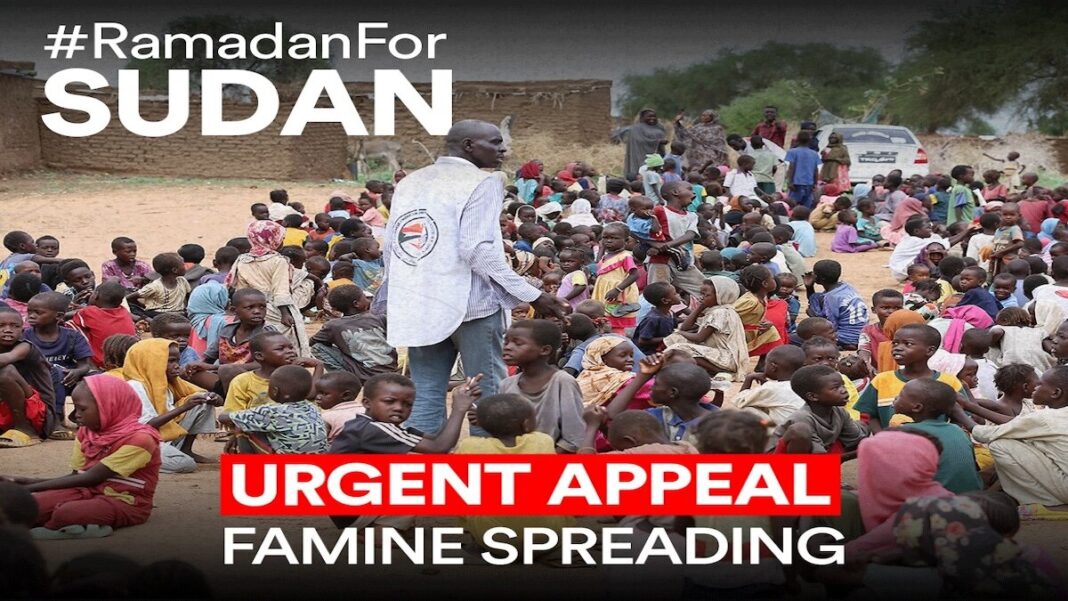
“In May 2024, four communal meal kitchens were set up in our area to respond to the growing number of internally displaced people who sought refuge in our village,” Alzain said. “Three of them were eventually forced to shut down due to shortages in supplies and the absence of financial support.” The community he describes, once full and generous, has been worn thin by time and crisis, now struggling to provide for its own residents, let alone those who arrived seeking safety.
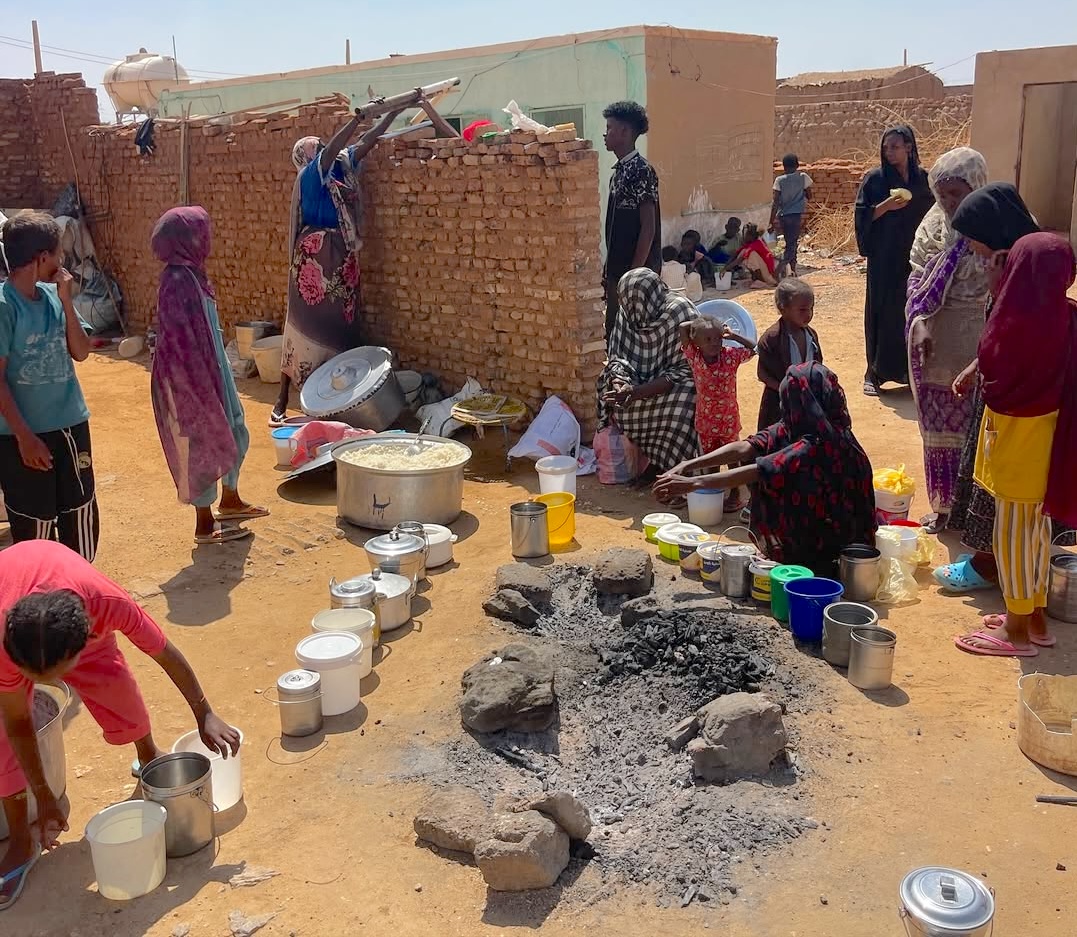
“By Ramadan 2025, only one communal kitchen remained,” he added. “Local farmers shared whatever they could spare from their harvests, limited as they were. We relied on whatever vegetables were available.”
Ramadan mornings were no longer marked by quiet anticipation alone, but by collective effort. Volunteers gathered early to prepare charity food boxes, funded largely by relatives and community members living outside Sudan, a fragile lifeline connecting those who stayed with those who were forced to leave.
What has shifted most profoundly is the nature of giving itself. Charity, once rooted in abundance and ease, now emerges from restraint and personal sacrifice, as the need is now greater and most people are struggling with the basics. It is practised quietly, often without certainty that tomorrow will offer more than today. In a landscape where need is nearly universal, generosity carries a heavier weight, transforming Ramadan into a season defined by endurance and moral resolve. Dignity is no longer preserved through excess, but through the collective determination to continue caring for one another despite scarcity.
In Al Sururab, displacement has reshaped how Ramadan is prepared for, turning what was once a season of careful planning into one of improvisation and mutual dependence. Families arrive suddenly, often with little more than what they can carry, while resources remain stretched thin. Preparation now depends less on stored abundance and more on fragile networks of trust.
“We have two pillars in our village, without whom we could not have survived,” Alzain explained. “One of our oldest traders took it upon himself to supply the communal kitchen with what it needed. He reduced prices, offered goods without charge, and at times even lent us money to keep the kitchen running.”
In the absence of stability, such acts have replaced formal systems of support. Ramadan preparations unfold through borrowed goods, delayed payments, and shared responsibility. What has emerged is a quiet redefinition of old rituals, where you see the community’s willingness to hold itself together when everything else remains uncertain.
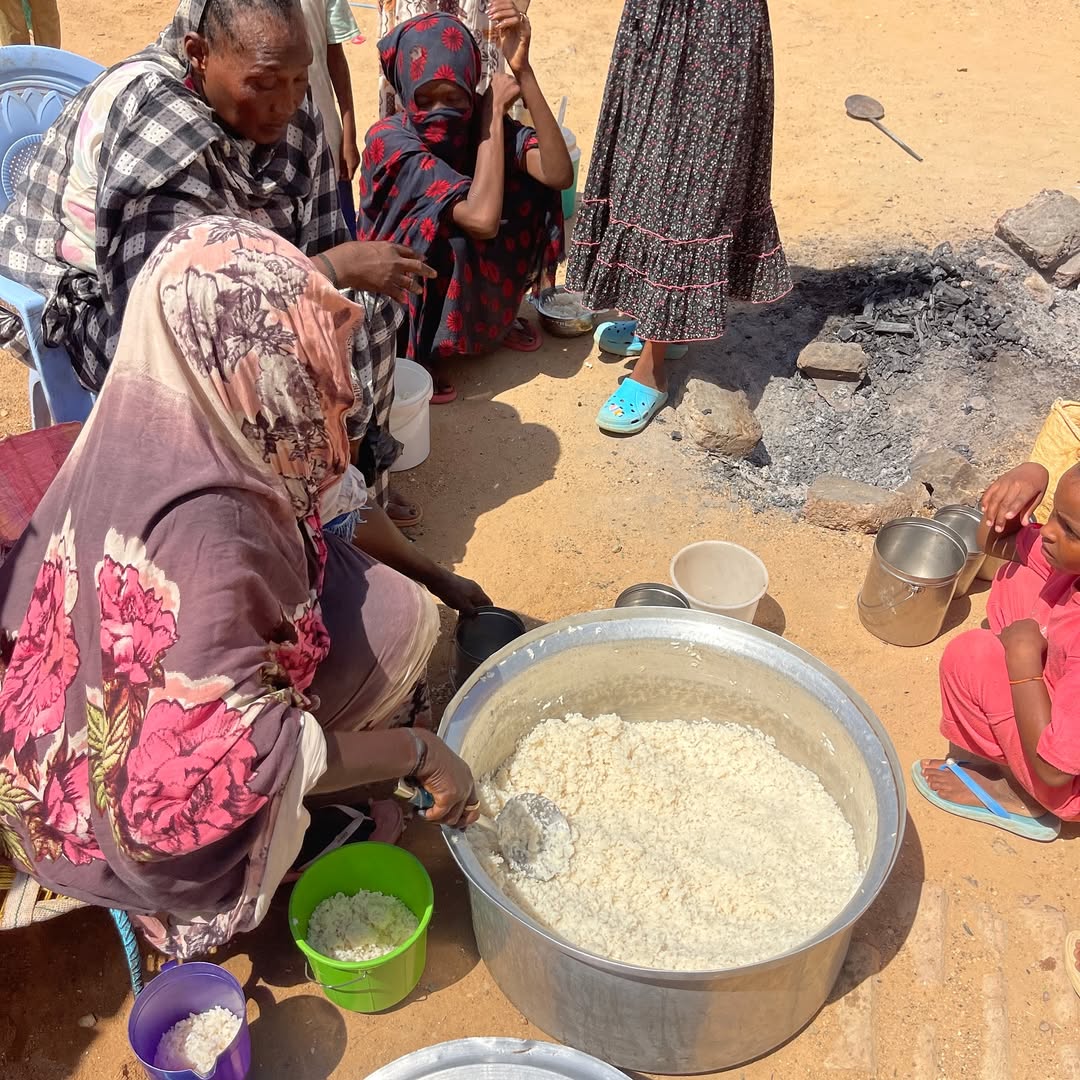
“The second pillar was Fatima,” Alzain said. “She’s an elderly woman who took on the communal kitchen from the very first day. What stood out about her was her honesty and her sense of responsibility. Even though she was suffering herself, she moved closer to where the food supplies were stored, just so the work could continue.”
He paused, then added, “Fatima woke up before dawn every single day. She worked from early morning until the food was served, feeding thousands with the help of volunteer girls who were also displaced and struggling. They were all exhausted, but they showed up anyway.”
In Al Sururab, this is what preparing for Ramadan came to mean: not decorations or full pantries, but people like Fatima and the young women beside her, turning endurance into routine and care into a daily practice.
Taraweeh and Qiyam Al Layl: Communal Prayers Under War
In Al Sururab, the nights of Ramadan no longer gather people the way they once did. Taraweeh prayers, traditionally performed in full mosques after the evening meal, now unfold in fragments, shaped by fear, displacement, and distance. With many mosques closed, empty, or simply too dangerous to reach after dark, prayer has shifted inward, into homes, shelters, and temporary spaces where safety is provided.
“People pray where they can,” Al Zain explained. “Sometimes it’s alone, sometimes with family members, sometimes a few neighbours if the situation allows it.” The familiar rhythm of standing shoulder to shoulder has been replaced by different often improvised and incomplete arrangements. For many, choosing to pray at home is simply practical, shaped by curfews, insecurity, and the uncertainty of moving through dark streets.
Tawarweeh and Qiyam Al Layl, voluntary Ramadan evening and night prayers mark the deeper nights of Ramadan, and have also changed in nature. What were once long prayers and extended nights in mosques, they are now shortened, or delayed. After spending the days securing food, water, or collecting aid; exhaustion weighs heavily, yet some still find moments to stand in prayer, even if briefly. In Al Sururab, Taraweeh and Qiyam Al Layl continue, differently than what they once were, shaped by survival, carried out in the margins of war-torn nights.
Al Sururab: A Changed Ramadan
‘In 2025, the Sururab Community Kitchen served an average of 300 families every day, reaching over 750,000 people with simple, nourishing meals. An average of 25–30 children came daily to receive meals on their own.’ The above statement sheds the light to what a single community is capable of when its individuals work hand in hand together.
For many in Al Sururab and the rest of Sudan, faith during Ramadan has become stripped of its former spectacle. It is practised privately, often invisibly, through small acts of care and moments of faith. What remains is not the Ramadan people remember, yet a vastly different version shaped by war, and uncertainty, one that reveals how belief adapts when everything else has been taken away.
In this new landscape, Ramadan is now defined by patience, shared responsibility, and a quiet act of dignity even as war continues to remake everyday life.
Images courtesy of Mazin Alzain

Tuga A Hafeez is an architect based in Sudan, currently exploring the world of writing. She is a passionate thinker, creative person, and a film, music and book enthusiast with a huge appetite for knowledge.