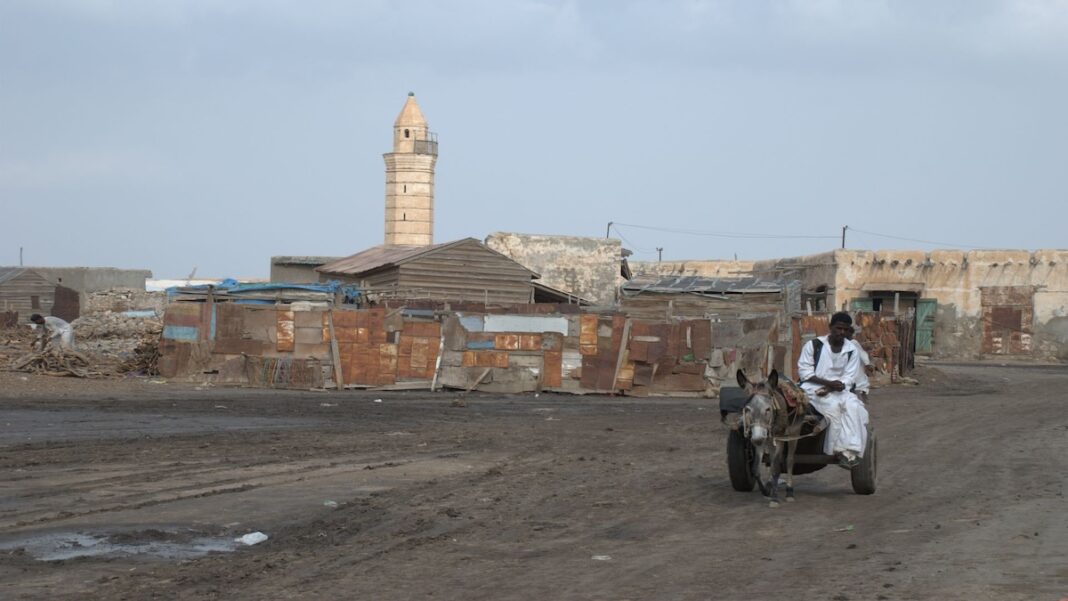
With over a million speakers, Beja, known to its speakers as Bidawiyet, is Sudan’s most widespread natively-spoken language after Arabic.
Often translated as “Bedouin,” Bidawiyet is the historic language of at least five Eastern Sudanese tribes, collectively referred to as Beja for centuries. “Beja” is a Sudanese genealogical category, similar to “Arab,” which groups together multiple tribes based on factors including shared ancestry and language. Beja are historically pastoralist, meaning, traditionally, they raise livestock and migrate within their land to follow their herds based on availability of grazing lands, hence the “Bedouin” label. Although differences between different Beja tribes cannot be disregarded, it is fair to say at least one feature unites them and distinguishes them from their neighbours, and that is their use of Bidawiyet in a variety of dialects.
While Bidawiyet’s popularity in East Sudan is often acknowledged, its historical depth tends to receive less attention. This is an exploration of those depths, and the language’s place in Sudanese history and society.
Origins of the Beja people
Possibly the earliest, unambiguous reference to Beja can be found in the work of Arab geographer Ahmad Al Ya’qubi, who, in the 9th-century, briefly mentioned several Beja kingdoms between the Nile and the Red Sea. Some of the Beja groups mentioned in medieval Arab geographies share names with modern Bidawiyet-speaking tribes (such as the Hadandawa and Arteiga), while others no longer exist, or are not considered Beja today. Arab geographers also included Tigre-speaking groups within the Beja category, although some Beja today do not consider Tigre-speaking tribes to be Beja. Regardless, it should be noted that many Tigre speakers, such as some members of the Beni Amer tribe, also speak Bidawiyet, with some researchers arguing they were originally Bidawiyet speakers who have gradually switched to Tigre.
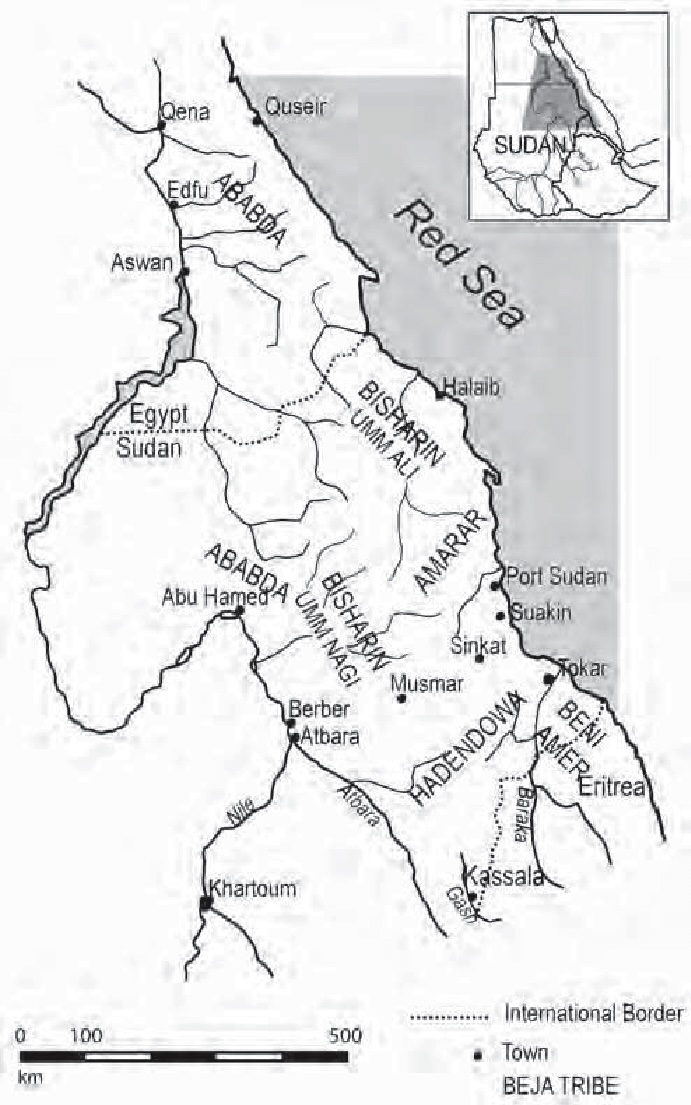
Language aside, medieval authors characterised Beja by their residence in East Sudan, their pastoralist lifestyle, and control of local precious mineral mines, which led to trade and, at times, violent conflict with Arab rulers in Egypt. Scholars often link these medieval Beja and their modern descendants to the Blemmye and Medjay groups, mentioned centuries earlier in Nubian, Meroitic, and Graeco-Roman writings. The ensuing narrative is that the Beja are pastoralists who have roamed the East Sudanese deserts since “time immemorial.”
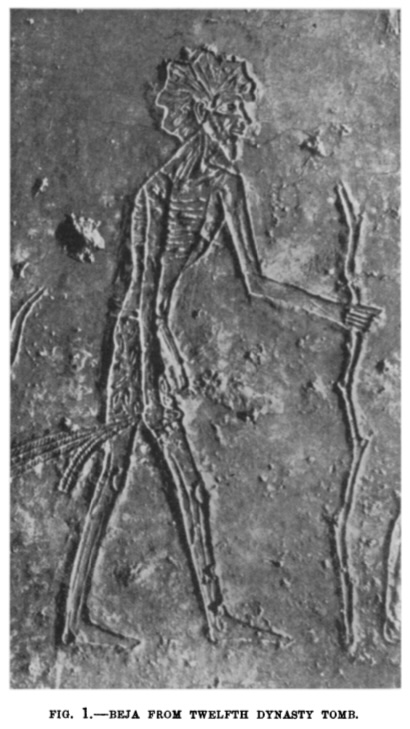
That said, evidence connecting the Blemmyes, Medjay, and Beja is far from unambiguous. There is a lack of reliable, detailed records on any of these groups to confidently draw a conclusion; those who wrote of the Beja were outsiders who often relied on hearsay rather than first-hand knowledge. Some, like American archaeologist Hans Bernard, criticise this popular narrative for portraying the Beja as an unchanging primitive society. In reality, shifts in lifestyle, culture, language, and identity over the course of history are inevitable for all peoples.
To avoid this common trope in histories of Africa, it is best to think of the Beja not as eternal nomads of East Sudan, but rather, a modern people descended from various local pastoralists, shaped by the historical circumstances of East Sudan. These circumstances include the rise and fall of Sudanese kingdoms, which historic Beja often contributed to, but also external interventions by Arab, Ottoman, and English empires. At times, there are high degrees of continuity between modern and past Beja, such as the economic centrality of and some tribal groupings. Other times, there are significant differences, such as the shift from non-Abrahamic faiths to Christianity and then Islam, the majority religion of Beja today.
Bidawiyet Origins and Interlingual Relationships
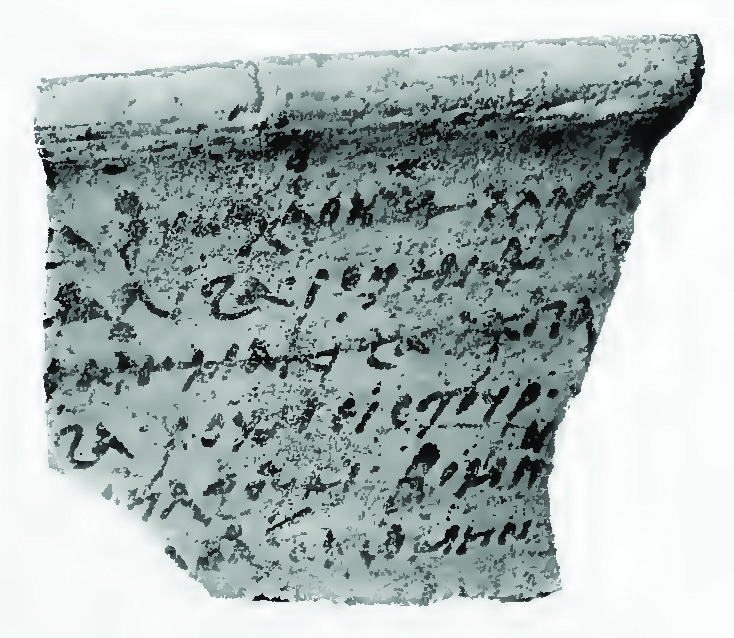
Medieval Arab geographers noted the Beja’s linguistic independence from their Nubian neighbours, with 10th-century geographer Al Nadim citing “a person who traveled extensively” to assert this language was also written. Al Nadim’s report is corroborated by the Saqqara Ostracon, a document which, based on analysis by linguists Gerald Browne and Klaus Wedekind, shows clear and consistent similarities to modern Bidawiyet, allowing us to conclude at least some medieval Beja wrote and spoke a language closely related to today’s Bidawiyet. Egyptologists Claude Rilly and Helmut Satzinger, who endorse a Blemmye-Medjay-Beja connection, claim an even earlier presence of Bidawiyet-related languages, arguing names attributed to Blemmyes in Kushite and Egyptian records show signs of Bidawiyet consonants and vocabulary.
Speculation aside, linguists today are unanimous that Bidawiyet is a Cushitic language, a rarity among Sudanese languages, which are largely Semitic (ie Arabic and Tigre) or Nilo-Saharan (ie Nubian and Fur). This means that Bidawiyet shares a remote linguistic ancestor with East African languages such as Oromo and Somali, a linguistic testament to Sudan’s links with the Horn of Africa.
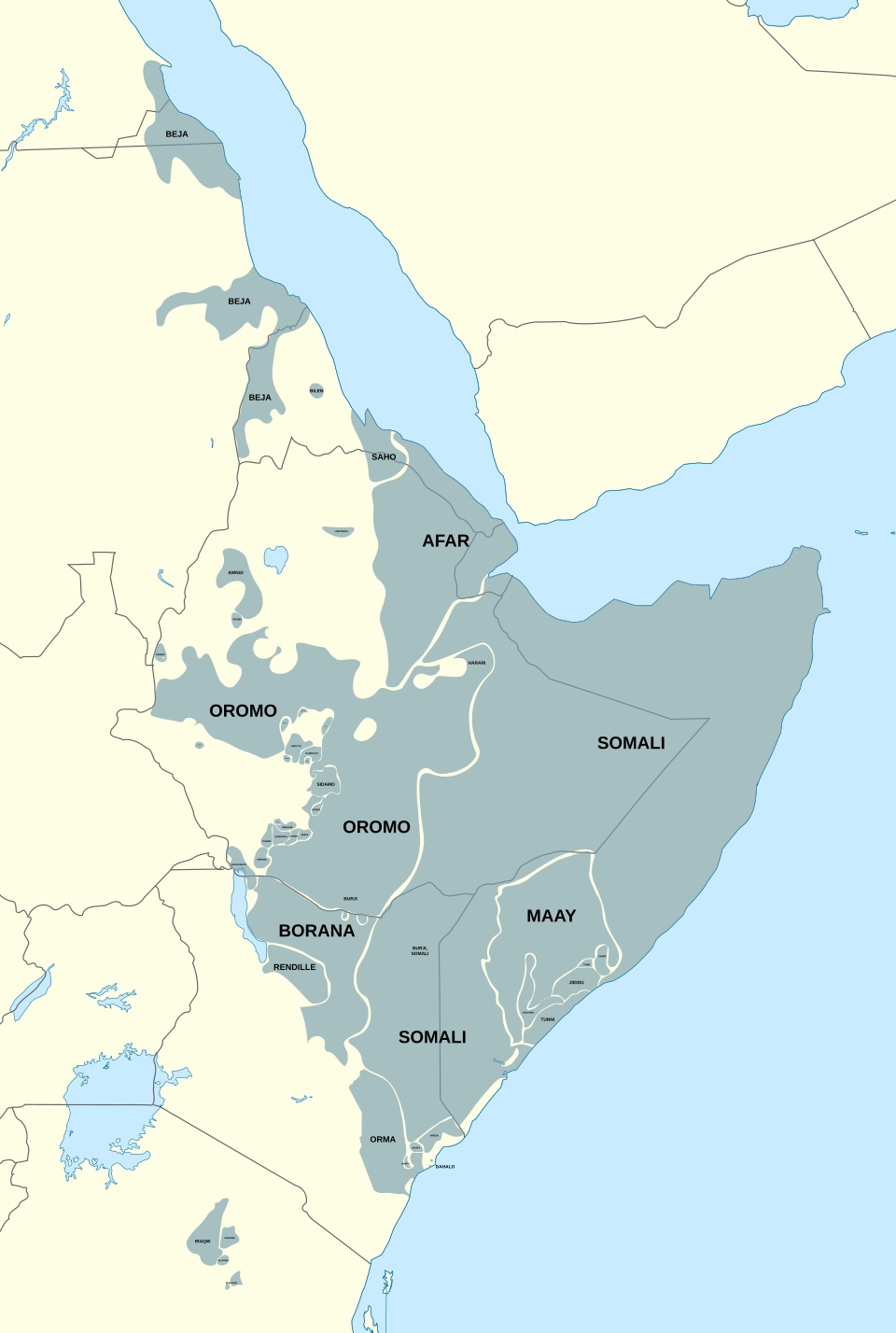
Despite being alone as a Sudanese Cushitic language, centuries of proximity with Sudanese languages such as Nubian and Arabic inevitably led to mutual influence. French linguist Martin Vanhove posits that, due to the length of this contact, influence from Bidawiyet on Nubian and vice versa is difficult to entangle, although Dutch linguist Vincent WJ van Gerven Oei makes an attempt, speculating the Old Nubian terms ditrab (“chicken”) and kabob (“pearl”) employ the Bidawiyet -b suffix.
Arabic-Bidawiyet connections are easier to identify, with Sudanese linguist Awn Al Sharif Gasim tracing the common Sudanese Arabic terms angareyb (“bed”), karkab (“wooden sandal”), and suksuk (“beads”) to Bidawiyet. The widespread Sudanese use of the -ab suffix to indicate ancestry, such as in the term Abdallab (“descendants of Abdalla”), also parallels Bidawiyet. The abundance of influences leads Gasim to ask whether the language was once more widespread, or if Arab migrations from East Sudan brought Bidawiyet vocabulary to Sudan’s centre. While Gasim draws no specific conclusion, it should be noted that 15th-century Arab geographer Al Maqrizi writes of a Beja community residing in ‘Alwa, a medieval Nubian kingdom that once ruled central Sudan, strengthening the possibility of a wider historical presence of Bidawiyet.
Use of Beja Today
In contrast to the majority of Sudanese non-Arabic languages, Bidawiyet is not considered endangered, as it remains in use among younger generations of Beja, especially in rural areas. In Arabic, Bidawiyet is often called rutana (literally “gibberish”), a term used for all non-Arabic Sudanese languages, or lahja (“dialect”), implying a means of communication lesser than lughat (“languages”) like Arabic and English. It should be stressed this is a social rather than scientific distinction, typically justified by the fact non-Arabic Sudanese languages are not widely written. For linguists, however, this criterion is irrelevant; thus, so-called rutana are considered languages, with the term dialect being reserved for variations in vocabulary and pronunciation within a language, such as Khartoumite Arabic in contrast to West Sudanese Arabic.
Even if disregarded as a mere rutana by non-speakers, among Beja themselves, Bidawiyet is highly valued as a vehicle for their cultural ethics, whose ideals of modesty are considered nobler than Sudanese Arabic, which is sometimes seen as vulgar. Sudanese scholar Mohammed Tahir Hamid notes that bilingual Bidawiyet-Arabic speakers will switch to Arabic to discuss topics such as women and family which are taboo to mention publicly in Bidawiyet. Hamid also contrasts the allusive nature of Bidawiyet love poetry, where poets allude to lovers by poetically describing the area in which they live, with love poetry in Sudanese Arabic, where women’s bodies are described directly. Said Bidawiyet poetry — which largely focusses on love, land, and praise of respected men — continues to be composed and is valued by rural and urban Beja alike, specifically for its expression of Beja cultural ethics and identity.
A Bidawiyet poem sung by Beja artist Muhammad al-Badri, with Arabic and English translations. (Source: Adrob Huaan)
Bidawiyet art is not limited to poetry. Bidawiyet music is also beloved, with singers such as Muhammad Al Badri being repeatedly featured on Sudanese national television, and artists such as Arka Saber being revered for the political messages in their music. Beja creative Osheik Ali, who goes by Adrob Huaan, produces dramas in Bidawiyet, while across the border to the east, the Eritrean government has sponsored the production of multiple Bidawiyet-language films.
A Bidawiyet-language documentary on the establishment of “Hope Band,” an all-girl Beja band.
In contrast to misconceptions of Bidawiyet as a primitive language for a primitive people, the reality of Bidawiyet holds lessons for all Sudanese to heed. First and foremost, that Sudanese non-Arabic languages continue to have a place in the modern world. Even when economic pressures require learning Arabic, the Beja communities of Sudan show that Arabic’s economic and religious function can coexist with their native tongue. Bidawiyet is also a sign of Sudan’s connectedness, both within itself via Bidawiyet’s influence on Sudan’s languages, and to other countries thanks to its ties to Horn African languages.
Bidawiyet also demonstrates that writing is not necessary for a language to endure. While Sudanese language activists for Nubian and Zaghawa often fixate on writing as a means of preservation, Bidawiyet remains healthy despite the extinction of its medieval alphabet and the failure of modern attempts to spread new Arabic or Latin-based writing systems.
Finally, Bidawiyet’s prestige within its community, and continued use in poetry, music, and visual storytelling are a reminder that, for Sudan’s non-Arabs, their languages are not a burdensome rutana waiting to die. Instead, they are a communication system with deep heritage and an irreplaceable role in representing their speakers’ unique experience of modernity.
500WM Columnist Hatim Eujayl is a Sudanese-American writer involved in various projects to promote Sudanese culture. His most famous works include the Sounds of Sudan YouTube channel, the Geri Fai Omir Kickstarter, and the Sawarda Nubian font. More of his writing can be found on his Substack, ‘My Sudani-American LiFE,’ where he discusses Sudanese literature and cinema. He can be reached on Instagram @massintod or by email at [email protected].