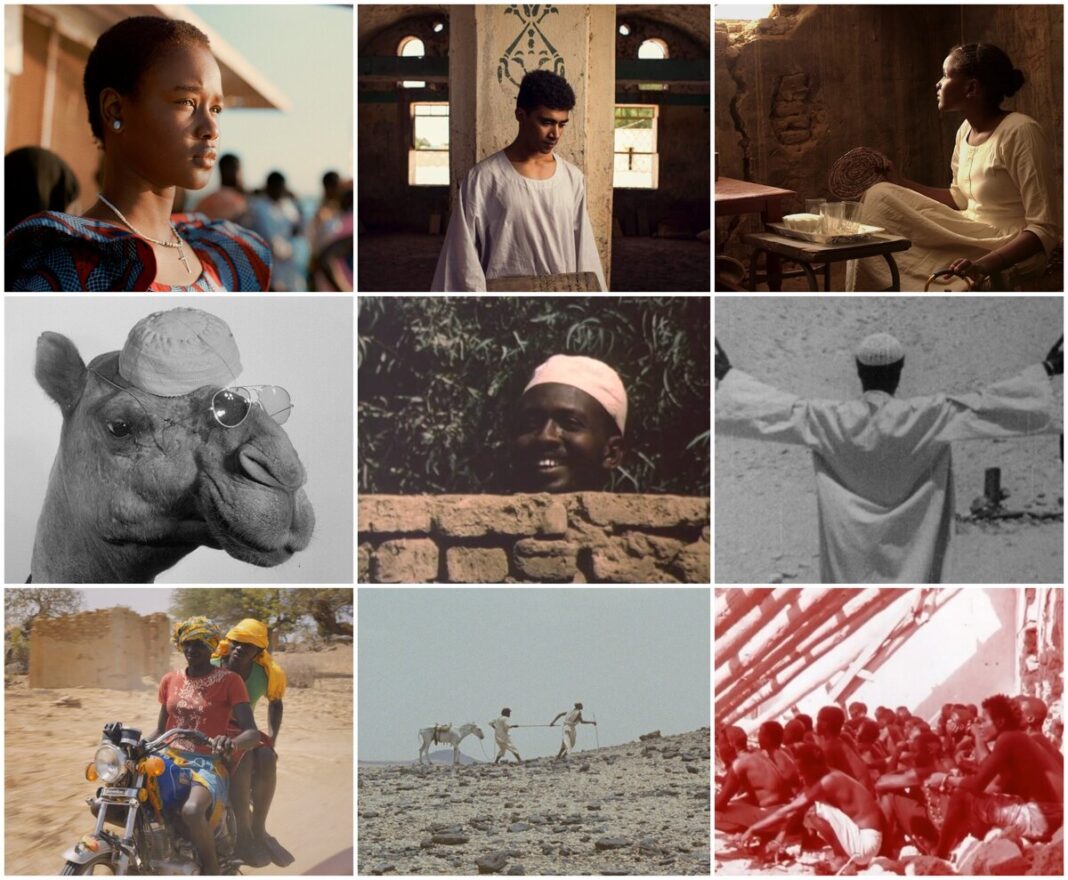
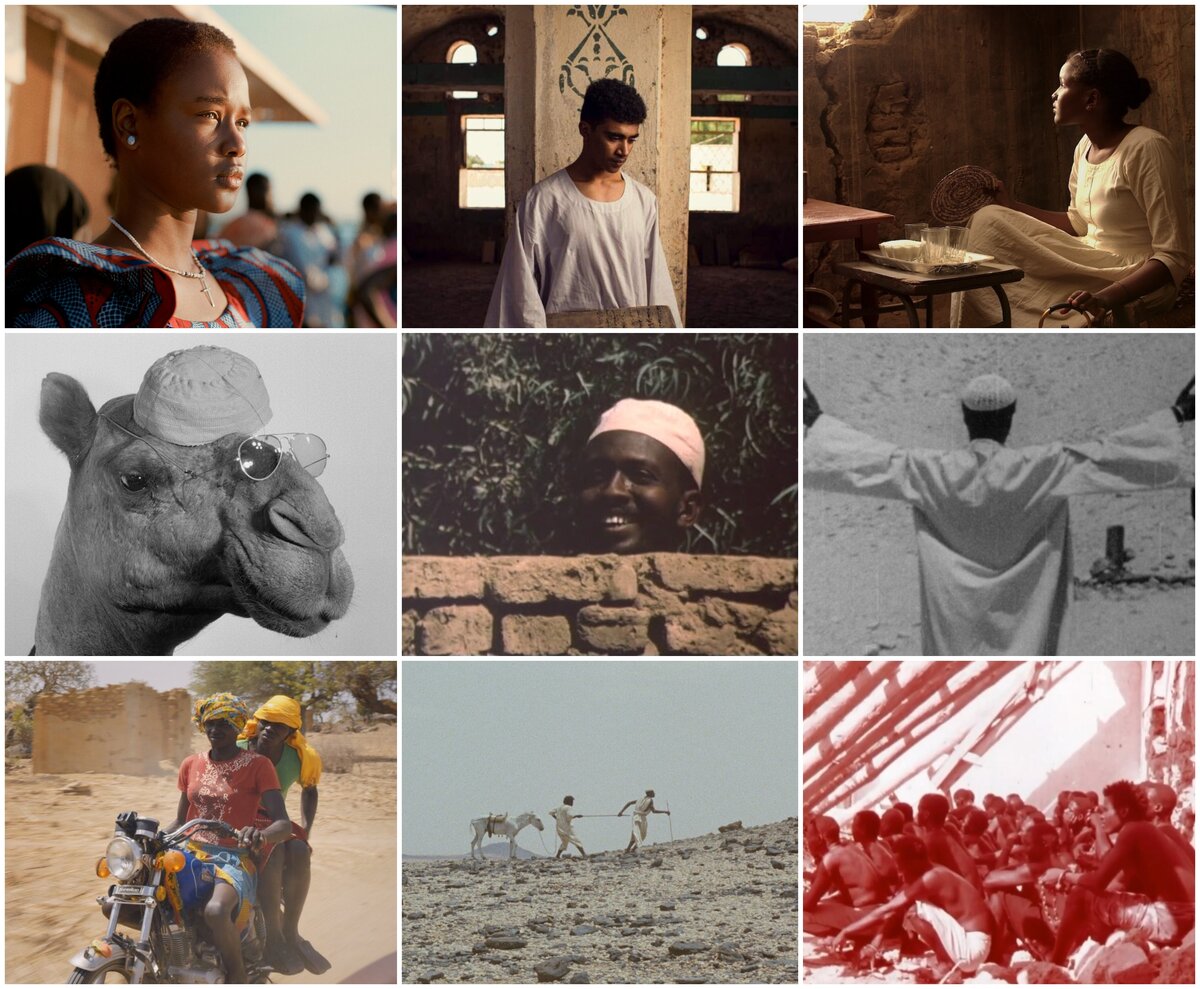
My first encounter with Sudanese cinema happened around 2018, a year that marked the beginning of what could be considered a Sudanese cinematic renaissance. Sudanese filmmakers such as Suheib Gasmelbari of Talking About Trees and Amjad Abu Alala of You Will Die at 20 attracted unprecedented local and international attention while amassing new interest in the country’s history of filmmaking.
Although there are ongoing issues of accessibility and comparisons to foreign cinema, an argument can be made that every Sudanese movie is worth watching as an insight into Sudanese perspectives – these 10, most of all. Before I list the 10 memorable Sudanese films, these are the guidelines for the selected films.
- Films with Sudanese directors only.
- No documentaries – narrative films only.
- Films are judged by their originality, depth, and effectiveness – not just entertainment value.
Now, without spoilers, or further ado, here are the top 10 Sudanese films – if you ask me.
#10: Al-Sit (2021) by Suzannah Mirghani
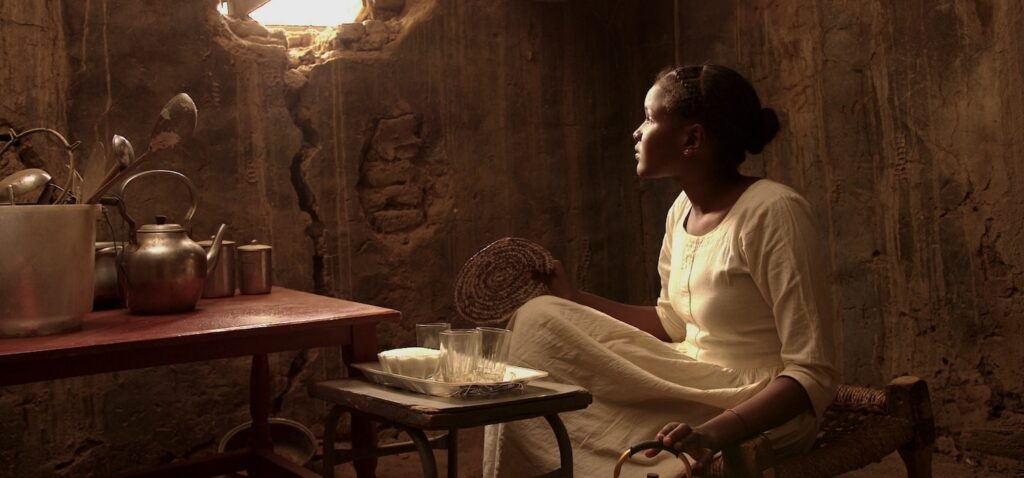
Mihad Murtada in the role of Nafisa. (Source: IMDb)
An uncomfortable, yet beautifully shot film about Nafisa, a little girl set to be married off pending the approval of her grandmother, ‘Al-Sit’ (‘The Madame’). The film depicts the harms of traditional Sudanese patriarchy and contemplates the tensions between rural peasant living and capitalist modernity. The actors’ performances are grounded, and the script thoroughly eschews romanticism, while still providing social context for the characters’ actions. However, the movie is a bit too brief to fully deliver on many of its themes. Regardless, it’s a worthwhile watch, especially for those who appreciate feminist cinema.
Duration: 20 minutes
Available on Vimeo On Demand and Netflix MENA
#9: The Dislocation of Amber (1975) by Hussein Shariffe
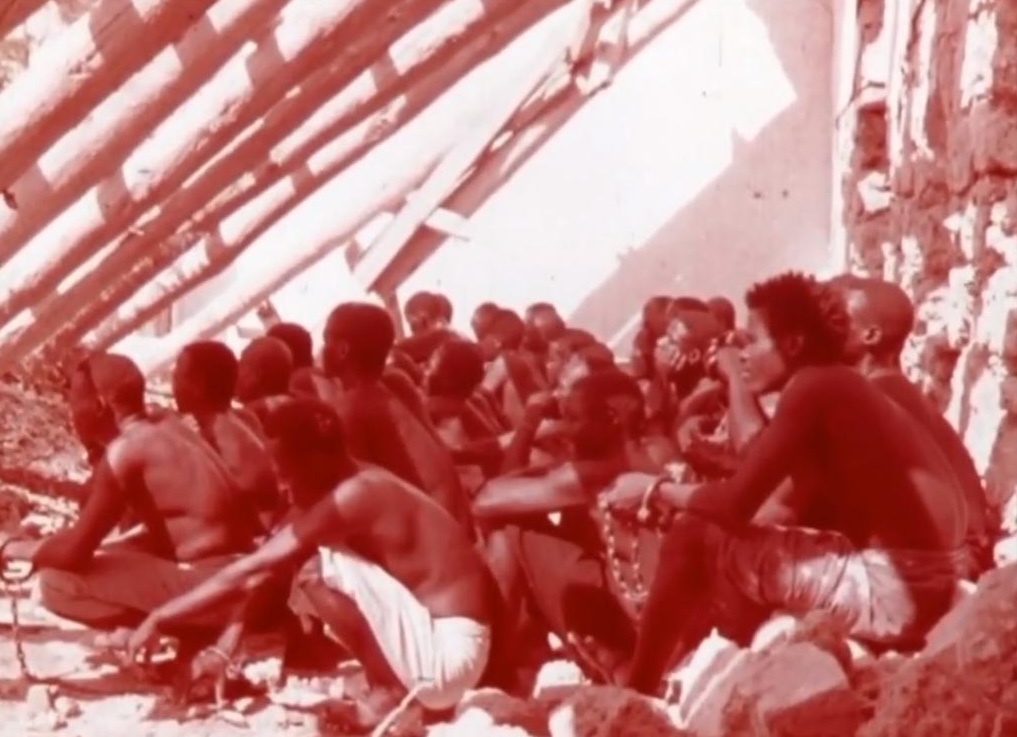
A depiction of enslaved captives in the ruins of Suakin. (Source: IMDb)
A silent, surreal film about the history of Suakin, an ancient port city in east Sudan. The film has an incredible soundtrack, mixing traditional madeeh, Beja rababa music, and Quran recitation. Its imagery is captivating and atmospheric, rich in visual allusions to Sudanese history, especially ritual, colonialism, and slavery. There is no plot per se, but if you’re interested in Sudanese history and can appreciate surreal filmmaking, The Dislocation of Amber is an early classic that’s definitely worth its runtime.
Duration: 30 minutes
Available on YouTube
#8: The Rope (1985) by Ibrahim Shaddad
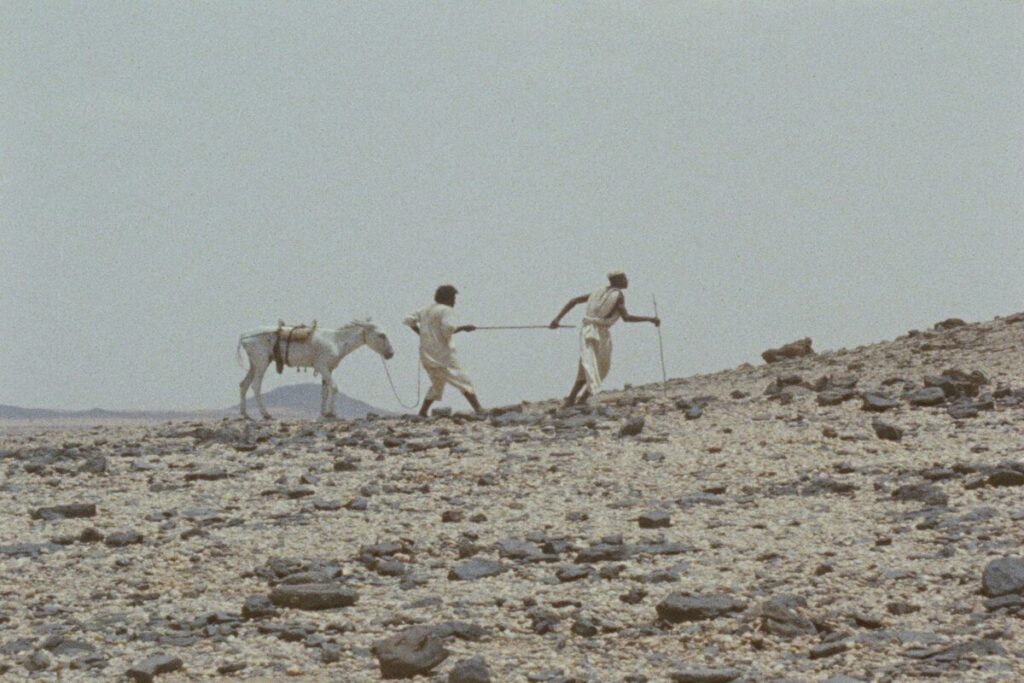
A scene from ‘The Rope,’ where a blind man leads another through the desert. (Source: Berlinale)
An exemplar of Sudanese silent cinema, keeping a sense of tension despite its minimal plot and lack of dialogue. The Rope takes place in the aftermath of an Ottoman massacre in 1822, as two blind men escape through the desert with their donkey. The film immerses you in their fear and confusion, a microcosm for the helplessness of imperial victims. While its silent nature leaves room for symbolic interpretation, there is no overt message, and the focus is squarely on human suffering. It’s a stressful but unforgettable watch, especially for audiences who can overlook sparse narrative in favor of atmosphere and originality.
Duration: 32 minutes
Available on DVD from Sudan Film Group
#7: The Roundup (2018) by Hajooj Kuka
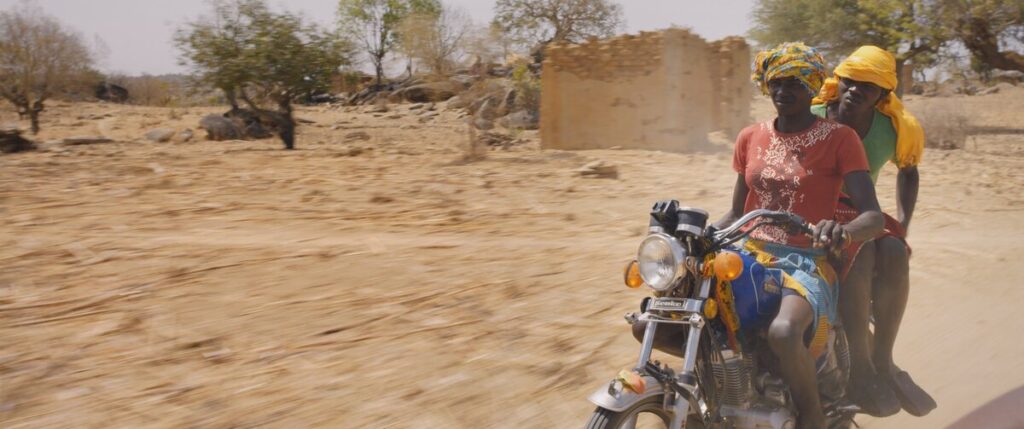
Kamal Ramadan and Ganja Chakado in the roles of Adnan and Absi, respectively. (Source: Arab Film Festival)
A comedy set in a warzone, The Roundup tells the story of a soldier in the Sudan People’s Liberation Army – North (SPLA-N) whose girlfriend kicks him out for having a romantic relationship with his gun. The film offers a fascinating contemplation of the psychological impact of war on combatants and non-combatants alike. The script is laden with quips and slapstick comedy, encouraging laughs as it treats war with a sense of nonchalant absurdism. Unfortunately, the jokes do not always land, and the actors’ inexperience is at times evident. Still, it’s a creative and charming film with some of the best special effects in Sudanese cinema.
Duration: 78 minutes
Available on Vimeo On Demand
#6: You Will Die at 20 (2019) by Amjad Abu Alala
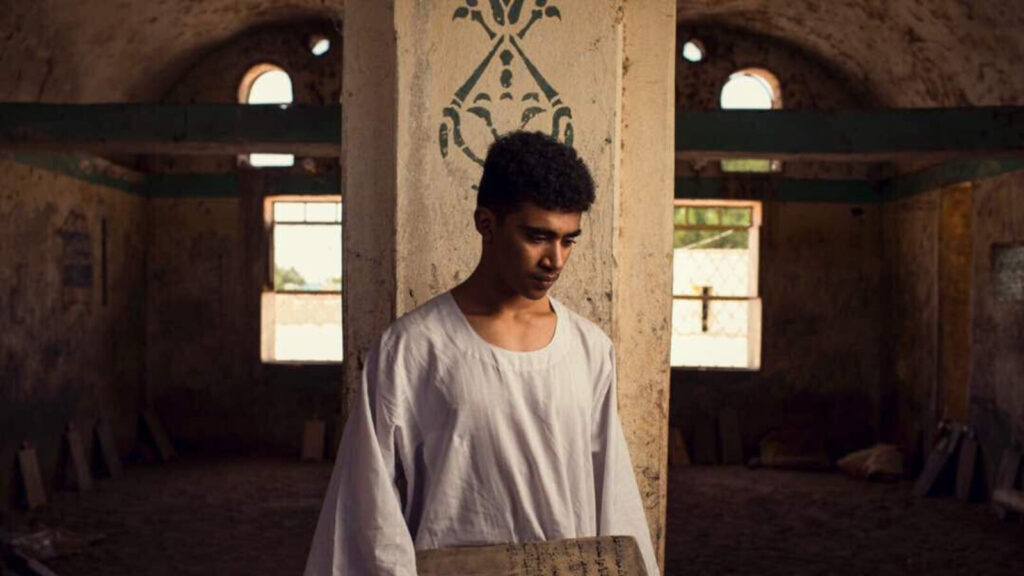
Mustafa Shehata as Muzammil, portrayed in a Sudanese khalwa/traditional Qur’an school. (Source: Sørfond)
This is perhaps the most controversial Sudanese film, and I find my opinion of it changes each time I watch it. The film tells the story of Muzammil, a rural boy told by a Sufi sheikh that he will die at 20, laying the groundwork for an interrogation of traditional Sudanese religiosity and the suffering it causes. The film is beautifully shot and thematically bold. However, it is also slow, thin on dialogue, and its critiques don’t go beyond a narrow, Western conception of personal freedom, and its treatment of the character Sitannissa seriously undermines the movie’s themes. Its revolutionary spirit is still palpable, and it remains worth watching for those looking for a socially-conscious Sudanese drama. Just don’t make my mistake by watching it with your parents.
Duration: 103 minutes
Available on YouTube Movies
#5: Human Being (1994) by Ibrahim Shaddad
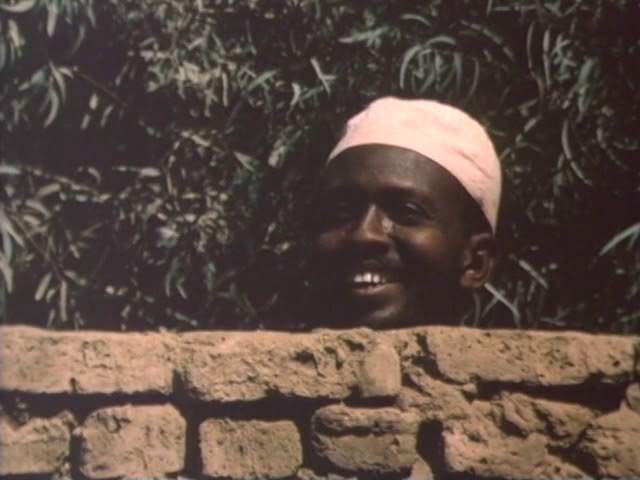
Ar Rashid ‘Isa in the role of the cattle herder. (Source: Aml Mohammad, YouTube)
A tragedy about a cattle herder who ventures to the capital city to recover his lost bull. The film deals with the disconnect between rural and urban life, as well as the 1983 September laws that implemented amputation as a crime for petty theft. The story is deeply surreal, told in a non-linear manner that slowly reveals the protagonist’s joys and traumas. It’s a moving critique of the cold injustices of urban life, and its star, ar-Rashid ‘Isa, gives a dynamic performance, attracting chuckles and sympathy in equal measure. Undeniably a classic, but be warned – there’s gore!
Duration: 27 minutes
Available on YouTube
#4: A Camel (1981) by Ibrahim Shaddad

A camel dressed like an elderly Sudanese man. (Source: Metrograph)
The pioneering director’s masterpiece is told from the perspective of a camel working a traditional sesame mill, showing us the memories and daydreams interrupted by their exploitation for hard labour. A Camel pulls off the impressive feat of bringing the audience into its protagonist’s mind, highlighting both the camel’s humanity and the latent cruelty of this fixture of Sudanese life. The movie is surprisingly emotional, and challenges the audience to confront the treatment of animals by human beings. Filled with bizarre and shocking images in beautiful black-and-white, A Camel is one of the most inventive Sudanese short films, and its core message transcends time and culture.
Duration: 15 minutes
Available on DVD from Sudan Film Group
#3: The Tomb (1975) by Eltayeb Mahdi
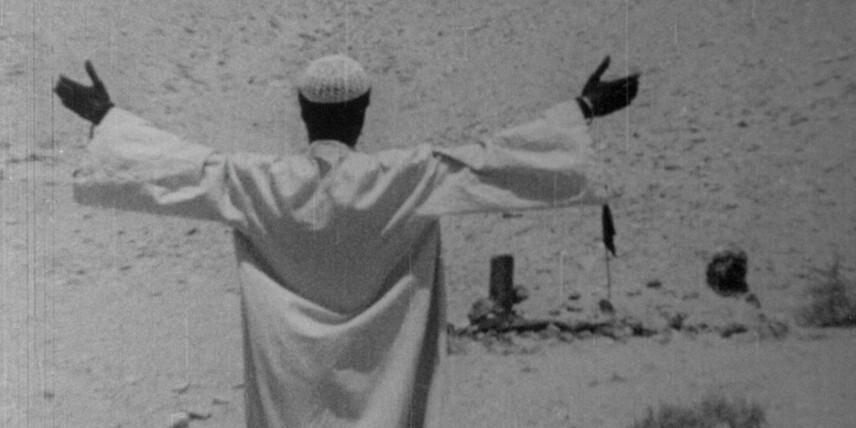
The Sufi sheikh and antagonist of ‘The Tomb.’ (Source: MUBI)
It is perhaps the earliest example of anti-Sufi Sudanese cinema, being a satire about a Sufi mystic who builds a cult around the tomb of a pious sheikh, which, in reality, houses a bundle of wheat. The film is briskly-paced, with fun performances and a brilliant ending that offers a grim perspective on faith. Its simplicity and comedic tone make it the perfect casual watch, with a delicious sense of irony missing from later, preachier anti-Sufi Sudanese cinema.
Duration: 17 minutes
Available on DVD from Sudan Film Group
#2: The Sheikh’s Blessing (1998) by Gadalla Gubara
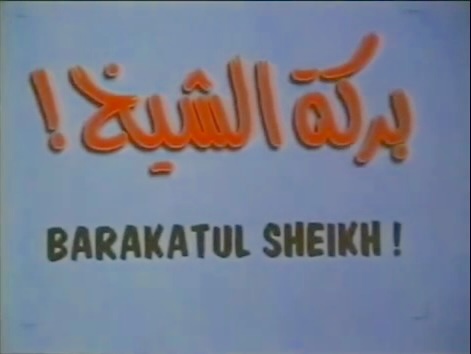
The title card for ‘The Sheikh’s Blessing.’ (Source: Skittygara, WordPress)
Based on a novel by Mustafa Ibrahim Muhammad, The Sheikh’s Blessing is easily the most entertaining of the 20th-century Sudanese feature films. Dealing with the story of a village changed by the arrival of a sheikh with apparent healing powers, the movie stands out for its positive assessment of rural Sudanese life and Islam, without mincing words in its critique of Sufi authority and superstition. The theatrical style of acting found in many older Sudanese films is perfected here, delivering powerful emotional performances, despite occasional overacting. The film’s mystery and crime elements keep you on the edge of your seat, making it the perfect fit for an adult movie night.
Duration: 114 minutes
Available on YouTube
#1: Goodbye Julia (2023) by Mohamed Kordofani
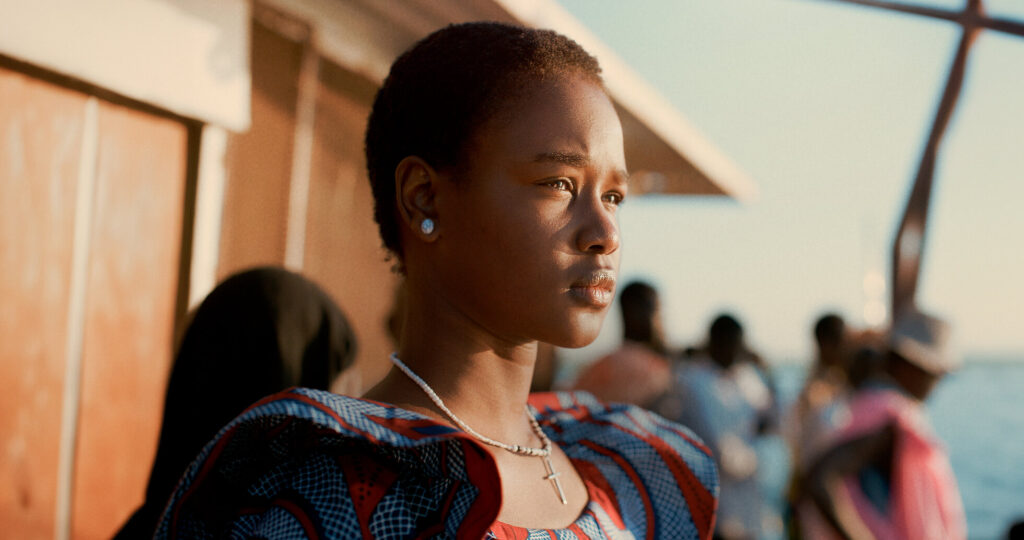
Siran Riak in the role of Julia, the deuteragonist of Goodbye Julia. (Source: Netflix)
No other Sudanese movie is as balanced as Goodbye Julia. It has consistently strong performances, a tense plot full of twists, gorgeous, claustrophobic cinematography, and one of the most nuanced approaches to Sudanese-South Sudanese relations ever put to the screen. Telling the story of a middle-class Sudanese woman and her South Sudanese maid, Goodbye Julia is an introspective film that critically examines the social dimensions of racial and economic divides. It is unflinchingly honest in portraying the tensions that concluded in secession. It’s thought-provoking, moving, and entertaining, with subtle writing and performances that make the film benefit from rewatching. If you are at all interested in Sudanese cinema, you can’t skip it.
Duration: 125 minutes
Available on Netflix MENA
Honourable mentions go to the following notable films that didn’t quite make the cut:
- Tajouj: This adaptation of the classic folktale has immense historical value, but unfortunately provides a bowdlerised, disorienting narrative that fails to engage.
- The Intelligence Officer’s Prison: The first Sudanese movie I ever saw, and a clear example of Mohammed Kordofani’s skill as a director and storyteller. Six years after my first viewing, though, I find I’m no longer comfortable with its fundamentally pro-state message, which I’d argue represents a misplaced empathy.
- Nyerkuk: Another extremely strong and well-told short film by Kordofani, weighed down by its didactic tone and failure to examine systemic oppression, instead offering individual moral reform as a solution to poverty.
Sudanese cinema is better than ever. Filmmakers continue to make bold, unique films that encourage introspection and add to the many art forms Sudanese people use to express and understand themselves. So, go out, give these movies a try, and join the conversation!
500WM Columnist Hatim Eujayl is a Sudanese-American writer involved in various projects to promote Sudanese culture. His most famous works include the Sounds of Sudan YouTube channel, the Geri Fai Omir Kickstarter, and the Sawarda Nubian font. More of his writing can be found on his Substack, ‘My Sudani-American LiFE,’ where he discusses Sudanese literature and cinema. He can be reached on Instagram @massintod or by email at [email protected].
500WM Columnist Hatim Eujayl is a Sudanese-American writer involved in various projects to promote Sudanese culture. His most famous works include the Sounds of Sudan YouTube channel, the Geri Fai Omir Kickstarter, and the Sawarda Nubian font. More of his writing can be found on his Substack, ‘My Sudani-American LiFE,’ where he discusses Sudanese literature and cinema. He can be reached on Instagram @massintod or by email at [email protected].