

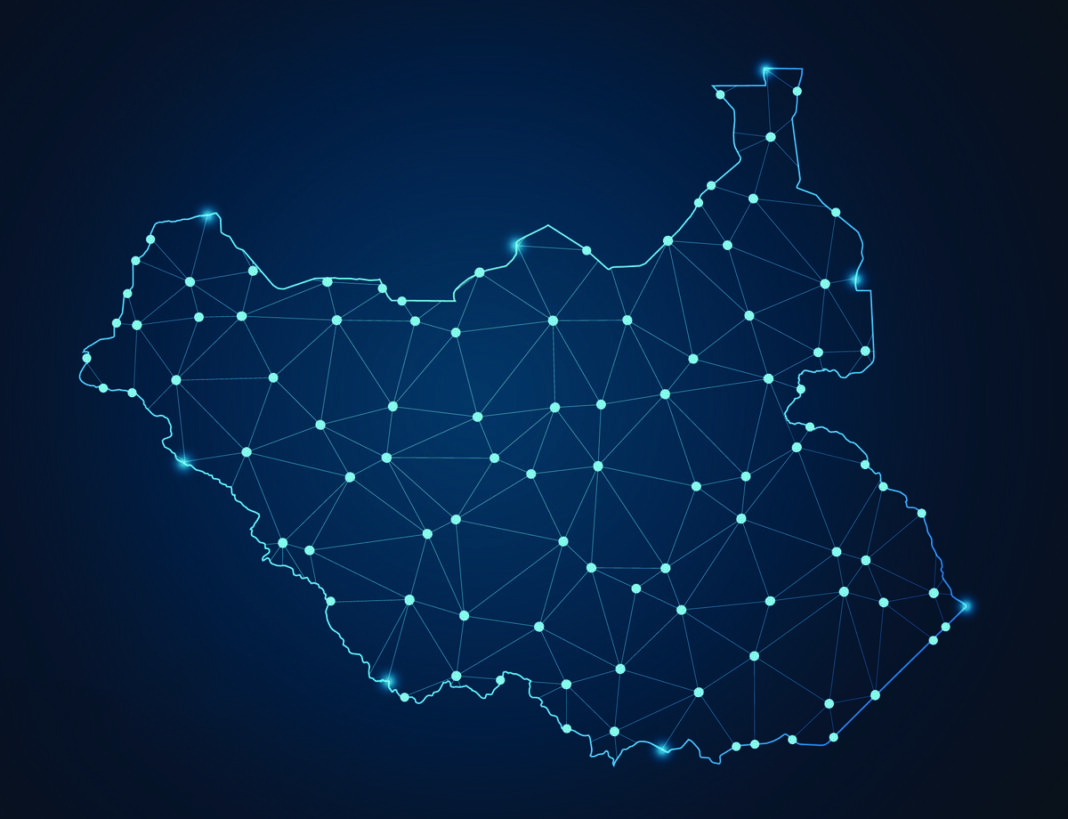

Since 2017, the artificial intelligence (AI) revolution has been monumental with the introduction of advanced AI chatbots such as ChatGPT developed by American AI company, OpenAI. Using ChatGPT and its likes has slowly seeped into people’s lives around the world, being part of almost everything we do from how we work, learn, and connect. However, as a man-made technology, it has both positive and negative impacts. This is witnessed across the world, including South Sudan, which has a population of approximately 12.1 million people, of which 1.9 million are internet users.
Within the complex educational situation of South Sudan, AI tools such as Photomath or ChatGPt are becoming irreplaceable for students in urban areas such as Juba. However, these tools allow students to solve complex mathematical equations, providing step-by-step explanations. Significantly improving comprehension and problem solving skills, this method bridges the gap in access to qualified teachers as the country struggles with a severe shortage in teaching staff..
On another note, many have raised their concerns about the use of AI technology in the educational context. Charles Omulu, a 27-year-old South Sudanese physics teacher at Nile High School in Juba, believes that over-relying on AI tools can negatively impact the student’s cognitive and learning process. “Let’s look at it this way: if we always use a calculator for simple arithmetic, we shall eventually lose the ability to do it in our mind. In a similar way, if AI does all the complex reasoning, our capacity for independent thought will diminish,” he said. Omulu emphasised that AI offers incredible conveniences, and at the same time brings a significant threat to human intellectual development. Moreover, the convenience that comes with AI can prevent the human brain from engaging in deeper cognitive processes that build true understanding and critical thinking skills. “It is not about rejecting technology; it is about mastering your own mind, ensuring that these tools serve to amplify your intelligence, not to replace it,” he added.
While the promise of AI in South Sudan’s urban areas is significant, the path to widespread use of these tools has obstacles, particularly around digital equity. Cliff Levai, a 33-year-old South Sudanese AI expert and computer engineer, observed that the usage of many digital services remains centralised in the capital. “Not everyone is using AI. If we look carefully, we can see how people outside the key areas are left behind due to the low connectivity in most of the country’s regions,” he said. As of early 2025, internet penetration stands at 15.7% and 4.47 million have cellular mobile connections. However, Levai believes this gap exaggerates existing inequalities,“We are very concerned about the population in the urban areas and how the advantages and disadvantages of AI can influence their lives, there are others who are not yet being introduced to AI. Therefore, this equation is missing some elements to complete,” he said. For Levai, to ensure the benefits of AI reaches all South Sudanese equally in South Sudan deliberate strategies are required to overcome these fundamental challenges and work for true digital inclusion, rather than leaving those in less connected areas further behind.
Yasir Logwuru, a 25-year-old South Sudanese web developer, highlighted a crucial point regarding data security while using such tools. “Yes, I am concerned, because South Sudan’s data protection framework is still weak, which makes misuse of personal data a real risk,” he said. However, Logwuru acknowledges the immense potential of AI in South Sudan. “While concerned about data protection, on the other hand, AI brings huge benefits—better access to education, healthcare, and business opportunities,” he said.
The key for a better use lies in a thoughtful approach according to Lagwuru. “For me, the balance is using AI carefully by sharing only what is necessary,” he said, while continuing to argue for better solutions. “AI tools in South Sudan can be adapted by making them offline-friendly, mobile-based, and language-aware, using solar power for energy and SMS/voice for low connectivity. In Juba, this means digital learning hubs and mobile health apps, in rural areas, lightweight AI on basic phones to support education and healthcare,” he said. His holistic perspective underscores the need for localised and infrastructure-conscious solutions to harness AI’s potential across the country.
As with the rest of the world, AI offers South Sudan a powerful path to progress, giving solutions to some aspects of life such as education, healthcare, and business. Yet, overcoming the digital divide, emphasising the data protection, and safeguarding cognitive development of users from the young generation are crucial challenges. By embracing thoughtful, localised strategies, South Sudan can harness AI to truly empower all its citizens.

Butros Nicola Bazia, born in Khartoum, Sudan in 2001, is a South Sudanese freelance writer, storyteller, and cultural commentator based in Juba, South Sudan. Nicola serves as columnist at 500 Words Magazine and contributed to multilingual regional and international platforms including The New Humanitarian, Mundo Negro, El Pais, Contemporary&, The Van-Magazine, and among others. His work explores the intersections of arts and socio-cultural dynamics, with a focus on South Sudanese narratives in the global conversations.