

With the rise of the internet and the popularity of social media, many advantages have emerged, such as bringing the world closer together and connecting people from different parts of the globe for friendships, marriages, and even business opportunities. However, for many, the internet and social media can also be a dark place, for reasons that often spill over into their real, everyday lives.
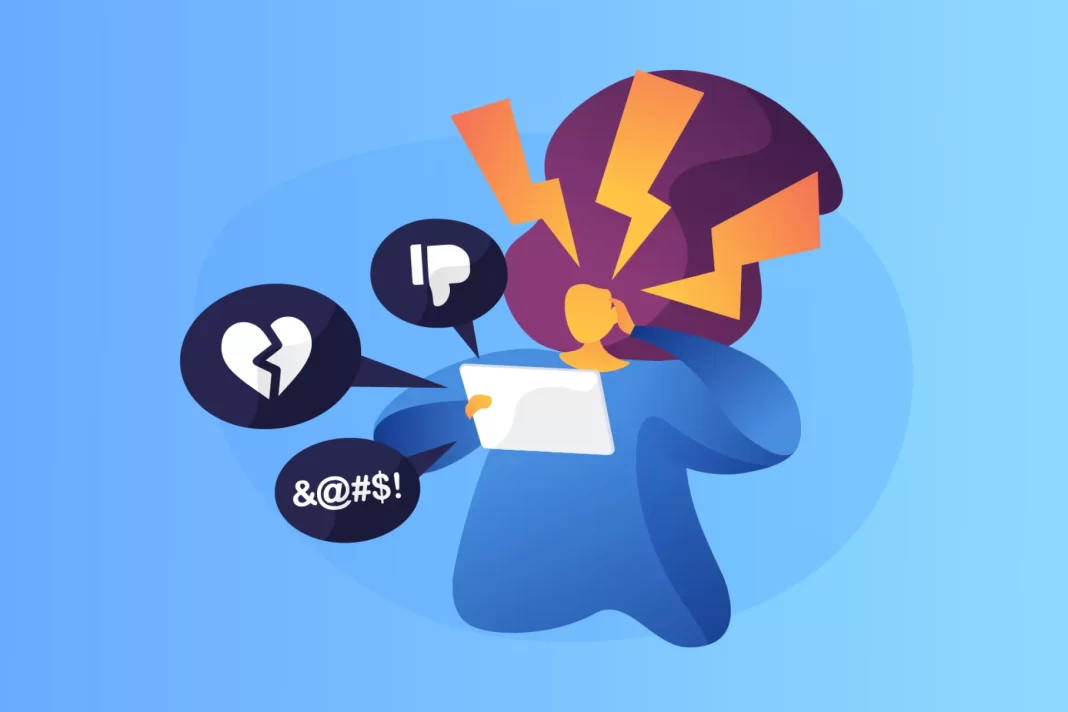
Online bullying has long been a serious concern on social media platforms. Also known as cyberbullying, it refers to the use of digital devices and platforms to harass, humiliate, or harm someone. It can take many forms from spreading rumors and posting embarrassing photos to sending cruel messages or creating fake accounts. One of the most troubling aspects of online bullying is its anonymity. A person, whether known or unknown, can easily reach you with deeply hurtful words. Escaping it can be difficult, as it can occur anytime and anywhere through devices like phones and computers.
Something most, if not all, of us are guilty of is sending mean messages or comments. We often do this on social media, finding a sense of power and courage in hiding behind a keyboard and the words we leave behind. More often than not, our targets are people we’ve never met and will likely never meet. Rarely do we direct such behaviour toward those we know personally, because we fear the consequences spilling over into our real, everyday lives.
Recently, Rawan Subahi, also known as Rony, a popular Sudanese-Canadian reggae singer and online personality, revealed on social media that she has long been a target of online bullying, suffering both emotionally and mentally as a result of her social media fame. Known for her signature dreadlocks, she gained prominence, especially on social media, during the 2019 Sudanese revolution and released her debut single in June 2020. To be fair, anyone in the public eye will at some point face scrutiny and criticism, which can either make or break them. This is particularly true in Sudanese digital spaces, especially on Sudanese Twitter, now known as X. youtube.com/watch?v=TmaVQi5Sd-U
In real life, and not to stereotype, the Sudanese people are generally outspoken, highly opinionated and critical – always having something to say about something. They are commentators, not shy to comment on other people and their actions even when it does not affect them directly or indirectly. You can go as far as saying they are meddlers. That too reflects online often driving people to either disappear or take a break from the public eye.
Subahi was once active on social media, but that has changed recently. On Instagram, for instance, where she has over 300,000 followers, her last post dates back to March 2025. The most liked comment on that post reads: “My dear, if you have a sporting spirit and can accept constructive criticism, allow me to say this: your voice is not suitable for singing, and it would be better if you fixed your appearance before recording. Secondly, if you are a Muslim, you should know that both singing and music are sins and acts of disobedience.”
Although the commentator claims to offer “constructive criticism,” the message is neither constructive nor helpful; it is judgmental and personal. True constructive criticism aims to help someone improve a skill or performance with specific, respectful, and actionable feedback. In this case, the tone is condescending, the remarks about Subahi’s appearance are inappropriate, and the statement that “singing and music are sins” amounts to moral condemnation.
Was this comment necessary? No. Even if the commenter believed it was, that does not mean it should have been shared. Not everything we think about others needs to be expressed. It is one thing to think it privately; it is another, and far more harmful, to post mean, unconstructive, and unnecessary comments publicly.
What many Sudanese people are commonly guilty of is being “shanafeen,” a Sudanese term meaning cynical or fault-finding. This was recently evident on 3 September 2025, when NPR released the NPR Music Tiny Desk Concert of Sudanese-Canadian singer, songwriter and poet Mustafa, also known as Mustafa The Poet. In his 21-minute performance, he was accompanied by female backup singers, dressed in traditional Sudanese attire and performing Sudanese zaghareet (ululation), including the popular Sudanese-American rapper Nadine El Roubi.
For many Sudanese, NPR Music Tiny Desk Concert may be unfamiliar; it is a highly acclaimed series of live concerts held at an actual desk and hosted by NPR Music in Washington, DC. Although Mustafa’s performance received widespread praise from audiences around the world, it was met with criticism from many Sudanese viewers, including well-known social media personalities such as Sudanese commentator Motamed Sharfi. The backlash was so significant that Mustafa and El Roubi publicly addressed and rejected the criticisms on social media.
As a people, Sudanese have a habit of being highly critical, often offering criticism that destroys rather than builds. In doing so, we tear others down, which can have far-reaching impacts on our society. On social media, some people feel an almost constant need to voice their objections or express disapproval— not to contribute meaningfully, but simply to show that something is wrong, false, or undeserving of respect. They gain nothing from it, except to emphasise the negative and, in the process, possibly tear someone down. In addition, the notion of peacefully and respectfully agreeing to disagree is slowly fading away.
Criticism, whether negative, destructive and even toxic, must stop. How can we do this? First, before reacting to something you dislike or disagree with on social media, ask yourself if it’s necessary or really worth saying anything at all. As the saying goes, “If you don’t have something nice to say, don’t say it.” Silence is often better than speaking hurtful or unkind words. If you still feel the need to say something, do so respectfully, and avoid making things personal. Look for the positives first – acknowledge what is good, then offer constructive suggestions. Focus on helping someone improve with positive, respectful, and actionable feedback.
Most importantly, exercise mindfulness and empathy – consider the feelings of the person you are addressing. As the saying goes, “Think before you speak” – or in this case, “think before you write.” Remember, if you don’t like someone’s social media content, you can always simply unfollow and move on.
For those receiving criticism, it is important to separate useful advice from personal attacks. Remember, constructive criticism is about the issue at hand, not about you. Manage your emotional response by staying calm, and ask clarifying questions to better understand the intent behind the feedback. You can also create distance from the source, assertively state that the criticism is unhelpful, or simply choose to ignore it. Most importantly, cultivating emotional resilience and a growth mindset allows you to reframe the experience as an opportunity to improve your response skills rather than internalise the attack.
It all comes down to emotional intelligence (EI or EQ), which is the ability to perceive, understand, manage, and use emotions in oneself and others. Key components of EI include self-awareness, self-regulation, empathy, and social skills. A society with higher collective emotional intelligence would likely experience greater well-being, more effective conflict resolution, and a stronger sense of belonging and mutual understanding. This, in turn, fosters more constructive community engagement and contributes to a kinder, more resilient world.

Ola Diab is the new founder and editor of 500 Words Magazine, and the deputy editor of Marhaba Information Guide, Qatar’s premier information guide. Based in Qatar, the Sudanese journalist graduated from Northwestern University in Qatar (NU-Q) in 2012 with a Bachelor of Science in Journalism and has since built a successful career in the print and digital media industry in Qatar. Find her on X (formerly Twitter) @therealoladiab or on LinkedIn.