
In Sudanese society, fulfilling social obligations is a core cultural value. This is rooted in the people’s deeply hospitable nature and strong sense of responsibility toward others and their well-being, as stated previously in my column piece, “Society, Culture and Tradition Above All: More Sacred Than Life Itself?.”
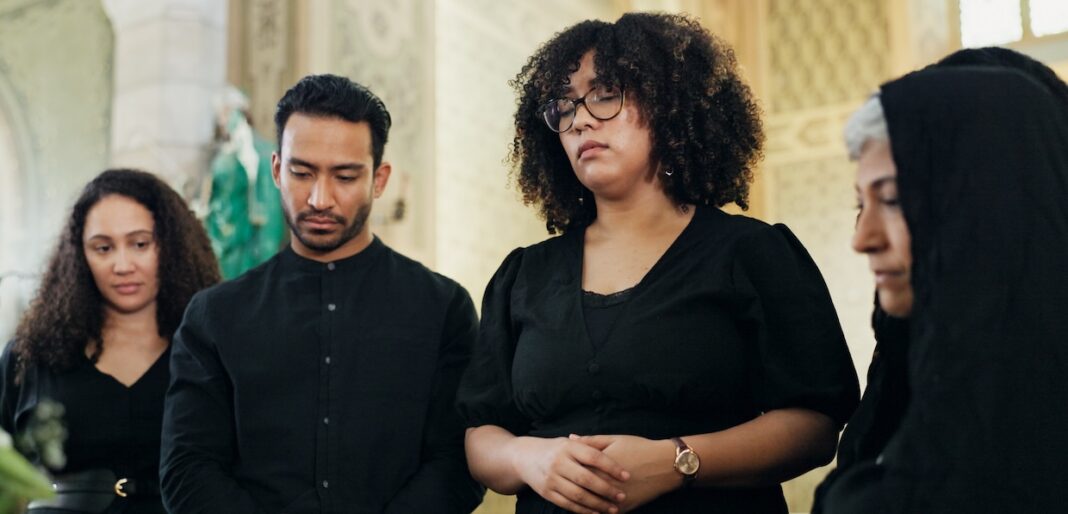
When it comes to Sudanese social and cultural obligations, two occasions dominate: ‘arass (weddings) and bikka (mourning or condolence gatherings), literally meaning “crying,” and also commonly referred to as ‘azaa. At first glance, you might expect birth to stand as the counterpart to death, but in reality, it is weddings and bikka that shape much of social life. One embodies joy and celebration, the other grief and loss. In Sudan’s socially driven, courteous, and hospitable society, attending either, or both, can be a weekly occurrence. It is not uncommon to hear of someone attending a wedding and a funeral on the very same day. I recently attended the bikka of a woman I wasn’t close to, but whose daughter is a friend from my youth. Though our relationship was distant, I still felt it was my duty to attend, as they remain close to my heart.
However, marriage is not guaranteed. Death is. All living beings eventually die. It is the one certainty of life. For this reason, our encounters with death, and with attending bikka, are more frequent and often more profound than our experiences with marriage.
n the predominantly Muslim Sudanese society, attending a bikka is considered a religious duty, whether or not you are close to the deceased or their loved ones. Abu Huraira, a prominent companion of Prophet Muhammad (PBUH), narrated that the Prophet said: “Whoever follows the funeral of a Muslim, in faith and seeking reward, and remains until the prayer is offered and the burial is finished, will return with two great rewards, each like the size of Mount Uhud. Whoever offers the funeral prayer and returns before the burial will return with one great reward” (Sahih Al Bukhari 47, Sahih Muslim 945). These rewards, known as qirat, are immense, believed to be equivalent to the size of Mount Uhud in Medina, Saudi Arabia, which holds great significance in Islam. Attending Salat Al Janazah (the funeral prayer) earns one qirat, while accompanying the deceased until burial earns two.
My first experiences with death, as with many, came through the loss of family members on my father’s side. The first to go was his brother and eldest sibling, Abdelaziz, in 1998, when I was seven years old. Two years later, in 2000, we lost my grandmother, whom we called youma, the Arabic word for “mother.” I was nine then. In 2002, my father’s youngest sister, Salwa, passed away. I was 11 years old, and because I was older and especially fond of her, I remember feeling the pain of her loss more deeply. Allah yerhamhom jamee’an (may God have mercy on them all). It’s important to note that all of these deaths took place in Sudan, while I experienced them from afar.
However, it wasn’t until the loss of my mother’s mother, our haboba, the Sudanese word for grandmother, that I truly felt the weight of grief. Her passing in 2008 remains my first and deepest experience with mourning, one that I still carry to this day. I was 17 years old, and we had traveled to Sudan to spend the summer with her. Her death was also marked by my first experience attending a Sudanese bikka. I wasn’t just grieving; I was serving for nearly 12 hours each day. I remember feeling numb, my body and feet swollen from the endless work of attending to the dozens of people who came to pay their respects. It was only after everyone had left that I finally allowed myself to cry, throughout the night, until morning brought yet another wave of visitors.
Here, I experienced what is called reverse culture shock, or re-entry shock, despite being within my own culture. It left a bad taste in my mouth and tarnished the positive view I once held of Sudanese traditions. It opened my eyes to some of our negative practices, particularly in bikka and the way we grieve and mourn.
But before I turn to the difficult parts, I want to start with the beautiful.
The Beautiful
People coming together. Nothing is more profound and beautiful than the way, at the time of death, everyone drops everything, not only to mourn the deceased, but to mourn alongside those left behind. To face loss alone is among the hardest human experiences, and Sudanese traditions ensure that no one carries grief in isolation. It is common, and even expected, for Sudanese abroad to travel to Sudan, or wherever bikka, the mourning period, is held, even if they arrive after the burial. Within Sudan, people often journey long distances from other states to attend. Family members typically gather in one house and remain there for several days, usually up to seven, so that condolences can be received collectively. Family members typically gather in one house and remain there for several days, usually up to seven, so that condolences can be received collectively. When bikka ends, it is marked by Al Rafe’e, literally meaning “the lifting” or “picking up”, a reference to the mourning tent being taken down, which is often set up to receive guests, particularly men. Those unable to attend before Al Rafe’e must later visit each family member individually. Until recently, the mourning period often extended to 40 days, even after Al Rafe’e, with family, especially elders, remaining together for that entire time.
Reading Al Fatiha. Surah Al Fatiha, which means “The Opening,” is the first chapter of the Quran and consists of only seven verses. In a Sudanese bikka, it is customary to recite this surah when offering condolences to the bereaved. Before embracing or speaking to them, one first faces the family, raises both hands in prayer, open and pressed together, fingers pointing upward at chest level, and recites Al Fatiha. This is often followed by personal prayers for the deceased and their loved ones. Once finished, the hands are closed to signify the end of the recitation, after which condolences are offered. Sometimes it is announced aloud so others can join in the recitation. This practice is observed even when meeting someone to extend condolences for the first time after a long period has passed since the death.
Being the service. In some societies, families hire catering and hospitality services to serve guests during mourning gatherings. In Sudan, however, it is family, friends, and neighbours who take on these responsibilities, cooking meals, preparing and serving tea, coffee, and water, and even washing dishes and cleaning. Sudanese families are typically large and closely connected, which means there are many hands to help. Still, this tradition is gradually shifting, with more families beginning to hire assistance, especially among the Sudanese diaspora, where fewer relatives are available to share the work. This change is slowly becoming accepted, as it allows family members who would otherwise spend their days serving guests the space to mourn and grieve.
Al Kashif. A common practice in Sudanese culture is for people to contribute to a loved one’s special occasion, such as a wedding or a funeral. These contributions may be financial or in the form of food, beverages, and other necessities such as ice, sugar and tea or tea bags. During funerals, a person close to the bereaved family is usually designated to oversee Al Kashif, a record of contributors, carefully writing down the names of those who offered support and what they provided.
The Bad
Financially burdened. Sudanese funerals, especially in Sudan, can be very costly, especially when they last for several days. Much of the expense comes from providing food, including three meals a day, along with beverages for the many guests who attend. As a result, families frequently end up spending far more than they anticipated just to meet these social expectations.
The chatter. As with many things in life, when a bikka extends over several days, people can become desensitised. Soon, chatter begins, often accompanied by laughter and other behaviours that feel out of place in a setting meant for mourning.
The daily meals. In addition to water, and tea and coffee, those hosting the bikka are expected to provide daily meals – breakfast, lunch, and dinner – for their guests, especially those who arrive at mealtimes. In fact, some visitors intentionally come during these hours expecting to be fed. This custom originated as a way to accommodate working men and women who would leave their jobs briefly during breakfast or lunch breaks to offer condolences. Over time, it became a fixed expectation.
Meals, particularly lunch and dinner, are considered incomplete without meat, often requiring the purchase, or even the sacrifice, of animals each day. Such practices can become excessive and overindulgent. On the day of Al Rafe’e, the end of the mourning period, milk tea (instead of the usual black tea and coffee) is served alongside legaimat and other sweets, marking closure.
Yet, despite these symbolic gestures, the overindulgence makes a bikka enormously costly. Even with Al Kashif contributions and the help of family, friends, and neighbours, the financial burden remains an unnecessary weight on families already carrying the sorrow of loss.
Continuously hosting guests. In many cultures, the bikka takes place at a set day and time. While this practice has slowly begun to appear within Sudanese communities in the diaspora, it is still largely frowned upon in Sudanese culture. A Sudanese bikka remains open at all times, with families expected to receive and host guests at any hour – even after Al Rafe’e. As beautiful as it is to be surrounded by people who ease the pain of grief, the constant flow of visitors can also exhaust mourners who are already overwhelmed.
The Ugly
The henna. In recent years, a new trend has emerged where some mourning women apply henna specifically for the bikka. Unlike celebratory henna, it is plain and without patterns. Though uncommon, the practice can appear unusual, and to some, even cold or offensive, during a time meant for mourning and grief.
Over-crying or hysterical crying. At the moment of death, everyone has the right to mourn in their own way. Yet within Sudanese communities, I have witnessed forms of grief that can be extreme, particularly among women. I have seen people rolling on the floor, kicking, screaming, and at times even harming themselves. Often, these displays feel performative, tied to the notion that the more hysterical one appears, the more one demonstrates genuine mourning. This is especially evident when women first arrive to offer condolences: they cry loudly with the bereaved, only to return moments later to quietly recite Al Fatiha and then resume normal chatter with others.
Some of these practices are slowly fading, such as the custom where women would place the palm of their hand on the side of a mourner’s head, mimic the sound of crying for a time, and then pay condolences. The expression “bakeet ma‘ah/ma‘aha/ma‘ahom” (“I cried with him/her/them”) captures this tradition, suggesting that true condolences meant joining in visible grief, not just offering words.
The blame. As previously noted, Sudanese people as a collective are courteous and carry a strong sense of responsibility toward others. Failing to fulfill social obligations, however, can bring consequences such as criticism, accusations, or even social ostracism. This is particularly true in the context of bikka, where there is great urgency to offer condolences within a specific time frame, most importantly, within the first three days. Paying condolences late can invite criticism and even strain or sever social ties.
Changing Practices
In recent years, many fading practices have made bikka gatherings easier and less costly, especially the shortening of the mourning period. As beautiful as it is for people to come together in support of those grieving, such gestures, carried out in the name of culture and tradition, often come with a price: financial strain, exhaustion, and added stress for the bereaved. Guests, particularly the elderly, expect to be served throughout their stay, yet the longer they remain, the more the grieving family struggles – an unspeakable truth.
There is much that is beautiful in culture and tradition that we should preserve. Yet, there are also aspects that are harmful, practices that burden rather than comfort, and these we must learn to leave behind. Over time, more people are becoming aware, choosing logic and compassion over rigid cultural expectations, and even beginning to question traditions that no longer serve us.
Related posts

Ola Diab is the new founder and editor of 500 Words Magazine, and the deputy editor of Marhaba Information Guide, Qatar’s premier information guide. Based in Qatar, the Sudanese journalist graduated from Northwestern University in Qatar (NU-Q) in 2012 with a Bachelor of Science in Journalism and has since built a successful career in the print and digital media industry in Qatar. Find her on X (formerly Twitter) @therealoladiab or on LinkedIn.